
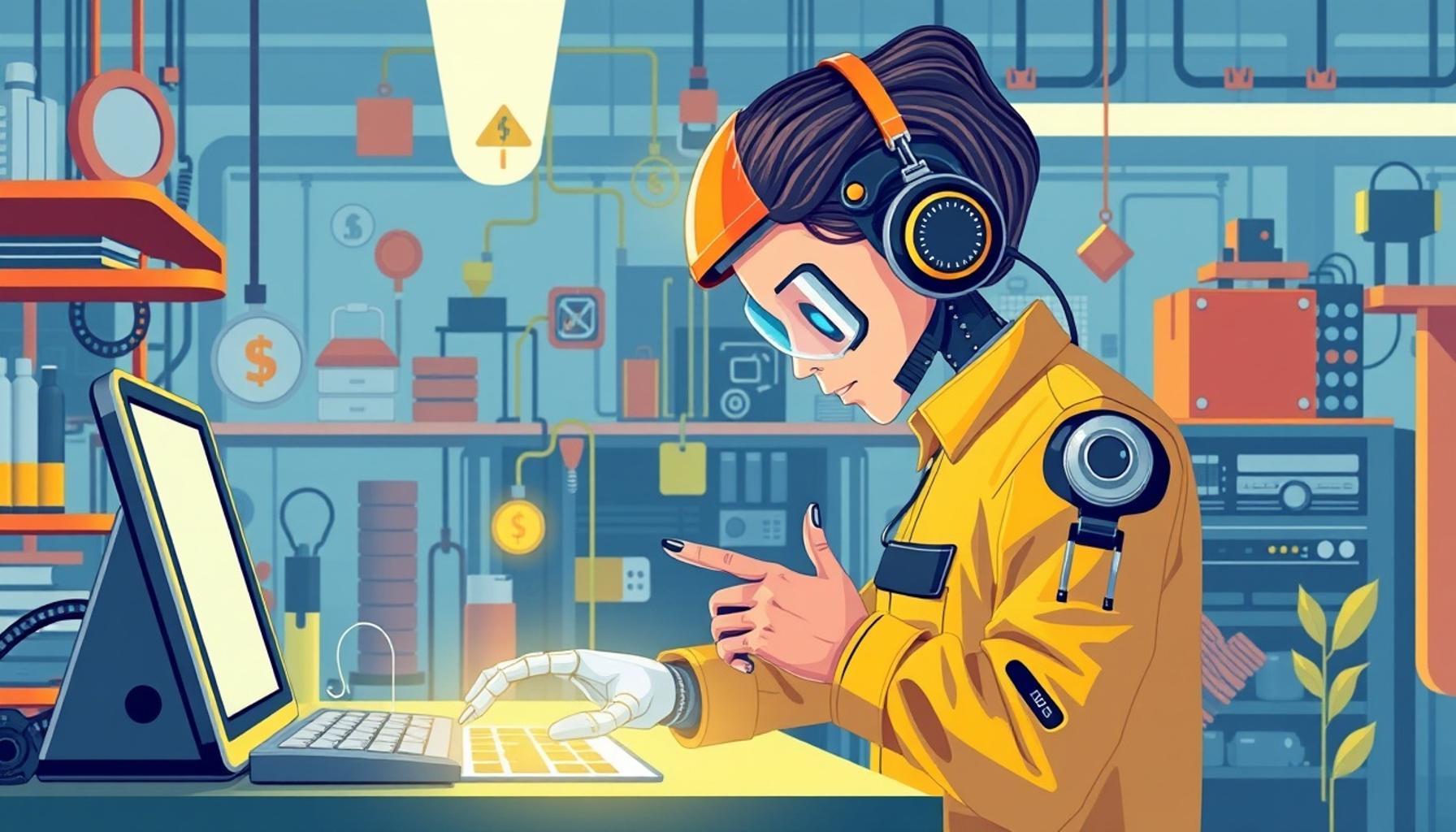
Understanding Collaborative Robotics
The advent of collaborative robotics, or “cobots,” marks a transformative phase in the workplace that blends human ingenuity with mechanized precision. Unlike traditional industrial robots, which operate separately from human workers, cobots are designed to work alongside them. This partnership harnesses the unique strengths of both humans and machines, fostering a workplace culture that promotes efficiency and innovation.
Benefits of Collaborative Robotics
The integration of cobots into various sectors opens a wide array of benefits, drastically reshaping workflows. Here are some key advantages:
- Enhanced Productivity: Cobots excel at performing repetitive and mundane tasks such as assembly, packing, or sorting. This allows human workers to pivot their focus toward higher-value responsibilities, such as strategic planning, problem-solving, and customer engagement. Research shows that organizations deploying cobots can increase productivity by up to 30% in specific operations.
- Increased Safety: Cobots significantly mitigate risks in environments that are typically hazardous for humans. For instance, in manufacturing, machines can take over tasks that involve heavy lifting or exposure to toxic materials. This not only reduces the incidence of workplace injuries but also fosters a culture of safety. According to the Occupational Safety and Health Administration (OSHA), companies that invest in advanced safety measures, including cobots, often witness a decline in worker compensation claims.
- Cost Efficiency: With lower upfront costs and integration fees compared to traditional robots, cobots offer smaller companies the chance to leverage advanced technology without substantial financial burdens. Companies can receive a return on investment within a year after implementing cobots, allowing for budgetary flexibility in other areas.
Applications in Various Industries
The versatility of cobots makes them suitable for a multitude of applications. In the manufacturing sector, cobots are increasingly being utilized on assembly lines for tasks ranging from precision assembly to packing products efficiently. For example, automotive companies utilize cobots to assist in assembling vehicles, allowing skilled workers to concentrate on problem-solving and design adjustments.
In healthcare, collaborative robots play a vital role in patient assistance, especially in tasks such as lifting patients or delivering medications throughout hospitals. This assistance not only alleviates the physical demands placed on healthcare workers but also enhances patient care through improved service speed and reliability.
The Future of Work: Integration and Collaboration
As we embrace the potential of cobots, a pivotal question arises: how can businesses effectively integrate this technology to maximize benefits? This involves not only investment in appropriate technology but also training employees to adapt to this new collaborative model. Leaders must cultivate an environment of continuous learning and adaptation, encouraging teams to engage with cobots to unlock their full potential.

Through this journey, it is clear that the future of work embodies more than mere automation—it is about fostering a culture of collaboration that ushers in a new era of productivity, safety, and efficiency. The relationship between human workers and collaborative robots presents a unique opportunity for industries across the United States to redefine their operational frameworks and enhance their service delivery.
DIVE DEEPER: Click here to explore the ethics of machine learning
The Growing Trend of Collaborative Robotics
As the concept of collaborative robotics continues to gain traction across various industries, the dialogue surrounding the integration of humans and machines is becoming increasingly significant. The transition from traditional automation to collaborative robots, or cobots, has sparked widespread interest due to their potential to redefine workplace efficiency. The modern workforce is witnessing a shift, where cobots serve not just as tools, but as integral partners that enhance human capabilities.
Key Characteristics of Cobots
Understanding the fundamental attributes of cobots is essential for businesses looking to implement these advanced technologies. Here are some crucial features that set cobots apart from traditional industrial robots:
- Safety Mechanisms: Cobots are equipped with advanced safety features such as force-limiting technology and sensors that ensure safe interactions with human workers. This inherent safety allows for close collaboration without the risk of injury, fostering a harmonious workspace.
- Flexibility: Unlike conventional robots that are often programmed for specific tasks, cobots offer remarkable versatility. They can be easily reprogrammed or reconfigured to perform multiple tasks, making them ideal for dynamic production environments that require quick adaptations.
- Ease of Use: With user-friendly interfaces and simple programming, cobots can be operated without extensive technical training. This democratization of technology allows team members across the organization to engage with and benefit from automated assistance.
The increase in cobots’ presence is not solely a technological evolution; it is also driven by the changing needs of the workforce. As industries face labor shortages and the demand for enhanced productivity rises, businesses are seeking solutions that enable their employees to focus on creative and complex tasks that require critical thinking.
Economic Impact of Cobots on the Workplace
Investment in collaborative robotics is presenting compelling economic advantages that cannot be ignored. Companies that embrace this technology are finding substantial savings, an aspect of innovation that is crucial in a competitive market. For instance, studies have indicated that businesses utilizing cobots have seen labor costs decrease by up to 20% due to improved efficiency and output. In the United States, as industries struggle to find skilled labor, the deployment of cobots can help mitigate workforce shortages while simultaneously enhancing product quality and speed.
This economic shift extends beyond just cost savings; it also encompasses enhanced competitiveness. Organizations that integrate cobots often report a revitalization of their workforce—employees feel empowered and motivated as they can apply their skills in more impactful ways, leading to job satisfaction and retention. When workers see technology as an ally rather than a replacement, a culture of collaboration flourishes that can innovate and drive the company forward.
The collaboration between humans and machines is a captivating paradigm, one that is reshaping the contours of the modern workplace. As industries explore the vast potential of cobots, the synergy they create will likely become a defining characteristic of future operational strategies, pushing the boundaries of what can be achieved collectively through human-machine collaboration.
| Advantage | Description |
|---|---|
| Increased Efficiency | Collaborative robots, or cobots, enhance productivity by taking over repetitive and mundane tasks, freeing human workers to focus on higher-level functions. |
| Enhanced Workplace Safety | By working alongside humans, cobots reduce the risk of injuries associated with heavy lifting and hazardous tasks, creating a safer environment and promoting well-being. |
The integration of collaborative robotics introduces a transformative approach to employment, reshaping workflows in various sectors. As businesses adopt this technology, they are not just investing in machines but in a collaborative future where humans and robots work as synergistic partners, enhancing overall operational effectiveness. With every robotic advancement, a steady increase in productivity can be observed, illustrating their ability to streamline processes while significantly reducing waste. Furthermore, the advantages of improved safety records cannot be overstated, as robots handle dangerous tasks, thereby minimizing the likelihood of workplace accidents. The combination of human creativity and robotic precision fosters an environment where innovation thrives, leading to more effective outcomes and a competitive edge in the market. Exploring the nuanced interactions between humans and machines reveals multiple layers of opportunity, from significant cost savings to enhanced employee satisfaction, making it essential to delve deeper into this rapidly evolving landscape.
DISCOVER MORE: Click here to dive deeper
Real-World Applications of Collaborative Robotics
The transformative potential of collaborative robotics is evident in several sectors, illustrating how cobots can enhance productivity and streamline operations. From manufacturing and logistics to healthcare and beyond, businesses are increasingly adopting cobots as versatile partners, reshaping workflows and driving efficiency.
Manufacturing: A Game Changer for Production Lines
In manufacturing, cobots excel by assisting human workers in repetitive and physically demanding tasks. For example, companies like General Motors and Ford have deployed collaborative robots on assembly lines to handle tasks such as assembling vehicle components and quality inspection. Research shows that cobots can operate alongside humans at a speed and precision that surpasses manual efforts, contributing to improved production rates without compromising safety.
Moreover, cobots can easily adapt to varying production needs. Take the case of Universal Robots, a leading manufacturer in collaborative robotics. Their cobots have been implemented across various production lines, demonstrating flexibility by switching between different assembly processes with minimal downtime, allowing organizations to respond more dynamically to market demands.
Logistics: Revolutionizing Supply Chain Operations
In the logistics sector, the introduction of cobots is enhancing supply chain efficiency significantly. Leading companies like Amazon have embraced collaborative robotics in their fulfillment centers, deploying autonomous mobile robots (AMRs) that navigate through warehouses to transport goods. This innovative approach allows human workers to focus on higher-level tasks, such as inventory management and customer service, while cobots handle the time-consuming transportation of products.
Furthermore, research from the International Journal of Production Research indicates that the integration of cobots within logistics operations can increase order fulfillment rates by as much as 30%, as they optimize movement and reduce bottlenecks. This synergy between humans and machines creates a more efficient and agile supply chain, enabling businesses to meet consumer demands promptly.
Healthcare: Enhancing Patient Care and Safety
The healthcare industry is also witnessing a notable impact from collaborative robotics. Cobots are being used to assist medical professionals in tasks such as drug delivery and patient monitoring. For instance, hospitals are integrating robotic systems to transport medications and supplies throughout facilities, enabling staff to devote more time to patient care. The FDA has approved several collaborative robotic systems for telemedicine, which allows healthcare practitioners to consult with patients remotely while leveraging data-driven insights from their cobots.
Moreover, cobots equipped with advanced AI can aid in surgical procedures, providing doctors with enhanced precision and support. Innovative solutions like the da Vinci Surgical System exemplify how cobots are being used to assist in minimally invasive surgeries, allowing for better outcomes and shorter recovery times for patients.
Challenges and Future Considerations
<pDespite their potential, the integration of cobots in various industries is not without challenges. Organizations face barriers related to worker resistance, technological interoperability, and the need for ongoing training. Understanding how to address these challenges will be crucial in leveraging the full benefits of collaborative robotics.
<pAs industries adapt to the evolving landscape, it is clear that cobots are more than just another phase in automation; they are a strategic investment that will influence future labor dynamics and enhance operational capabilities across the board. The synergy cultivated between humans and machines will likely transcend traditional boundaries, heralding a new era of collaboration that prioritizes both efficiency and employee engagement in the workplace.
DISCOVER MORE: Click here for insights into the future of home assistance
Conclusion: Embracing the Future of Work
As we navigate the complexities of the modern workplace, the role of collaborative robotics emerges as a pivotal element in shaping an innovative future. The integration of cobots not only enhances operational efficiency across sectors—such as manufacturing, logistics, and healthcare—but also exemplifies a profound shift in how humans and machines can work together synergistically. By alleviating workers from monotonous tasks and allowing them to focus on higher-order functions, cobots are enhancing job satisfaction and productivity.
However, to fully harness the potential of collaborative robotics, organizations must proactively address challenges related to workforce adaptation, technological integration, and ongoing skills development. Encouraging an open dialogue about these transformations can mitigate resistance and foster a culture of collaboration and innovation. The success of collaborative robotics hinges on a balanced approach, where both humans and machines operate within a framework that prioritizes safety and empowerment.
Looking ahead, the journey towards a deeper integration of cobots into everyday business practices is just beginning. It is essential for stakeholders—including businesses, policymakers, and educators—to remain engaged and informed about advancements in collaborative technology. By doing so, they can contribute to a workforce of the future that is not only more efficient but also more dynamic and prepared to adapt to changing demands.
Ultimately, collaborative robotics is not just a trend—it’s a transformative force that signifies an era of unprecedented collaboration, setting the stage for a revolutionary approach to work that combines the strengths of both humans and machines.