

The Transformative Power of Technology in Education
The recent advancements in computer vision and augmented reality (AR) signify a paradigm shift in the educational landscape. These cutting-edge technologies are influencing not only how educators impart knowledge but also how students absorb and interact with various subjects. By merging the physical world with digital insights, these innovations facilitate a richer, more engaging learning experience that transcends traditional methods.
Let’s delve into some remarkable features that are revolutionizing classrooms across the United States:
- Interactive Visualizations: Imagine students studying chemistry and witnessing molecular structures come to life right before their eyes. Through 3D models and animations, learners can manipulate and examine intricate designs, enhancing comprehension through visual stimuli. Similarly, historical lessons become dynamic as students virtually tour ancient civilizations or explore iconic landmarks using AR applications.
- Real-Time Feedback: The immediacy of feedback provided by AR tools transforms passive learning into an engaging dialogue. For instance, language learners can practice pronunciation and receive instant corrections through apps that analyze their spoken words, fostering an interactive classroom atmosphere and nurturing confidence in their communication abilities.
- Accessibility: AR technologies are instrumental in promoting inclusivity by offering tailored resources for students with disabilities. For example, visually impaired learners can benefit from applications that read text aloud or describe visual elements, while those with dyslexia can engage with visual aids that clarify complex information.
As educational institutions increasingly integrate these technologies, the focus is on creating immersive and captivating learning environments. Consider the following compelling applications that exemplify this trend:
- AR Learning Apps: These innovative tools overlay digital information on physical environments. For example, an app might allow biology students to explore the anatomy of a frog by scanning a real specimen, triggering a detailed holographic overlay that provides insights into different organ systems.
- Virtual Field Trips: With the advent of AR and VR, the world becomes a classroom. Students can dive into the deep ocean, visit the surface of Mars, or walk through historical events—all without leaving their desks. This exposure broadens horizons and sparks curiosity about global cultures and environments.
- Gamification: The integration of gaming elements into learning through AR foster a sense of competition and achievement. Students can navigate through challenges in a gamified layout, earning points and badges, which not only enhances engagement but also reinforces retention of knowledge.
The continued evolution of computer vision and augmented reality holds tremendous promise for the education sector. As these technologies further develop, their potential to transform learning environments will push the boundaries of student engagement and knowledge acquisition. Educators, students, and parents alike can look forward to a future where education is not just a one-dimensional experience but a multi-faceted journey filled with discovery and innovation.
DISCOVER MORE: Click here to learn about the future of patient care
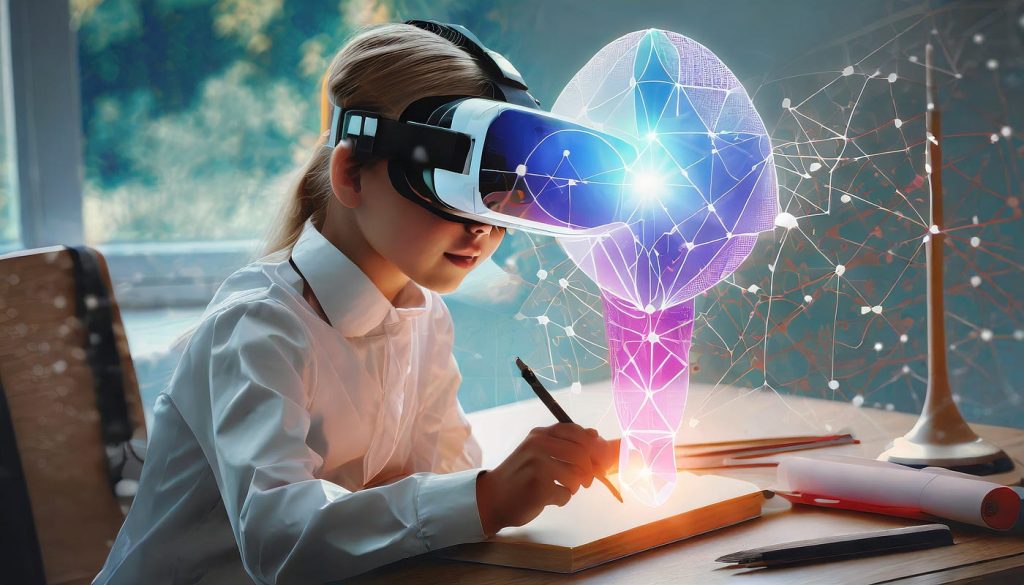
Innovative Applications of Computer Vision and Augmented Reality in Education
The integration of computer vision and augmented reality (AR) in educational settings is becoming increasingly prevalent, offering educators and students a realm of possibilities previously confined to the realm of imagination. These technologies provide actionable insights and dynamic interactions that fundamentally alter the learning experience. One of the most compelling aspects of these innovations is their ability to personalize education, catering to individual learning styles and needs.
Let’s take a closer look at some pioneering applications that illustrate how computer vision and AR are reshaping classrooms across the United States:
- AR Enhancements in STEM Education: Subjects like mathematics and physics become vivid and tangible when augmented reality is applied. For instance, students learning about angles and trajectories can visualize the concepts by interacting with AR simulations that depict projectiles in motion. This tactile approach facilitates a deeper understanding of complex theories and principles.
- Interactive Art and Design: In art education, AR tools allow students to explore artistic techniques and history in unprecedented ways. Imagine creating a mural where students can superimpose their designs on real-world walls, getting instant feedback about colors and designs from AR applications. This dynamic merging of digital art with physical canvases fosters creativity and innovation.
- Training Simulations for Vocational Skills: For vocational and technical programs, AR elevates training by providing realistic simulations that mirror real-world scenarios. Aspiring electricians can practice wire configurations in AR environments that showcase safety protocols and potential hazards, enabling them to experiment and learn without risk.
Furthermore, the application of computer vision extends beyond AR in enhancing educational content delivery. Picture an environment where students can interact with objects in the classroom, viewing enhanced digital information through their devices. For example, a student studying human anatomy can point a mobile device at a textbook illustration of the heart and see a 3D model, complete with labels and explanations. This integration of digital content with physical media captivates students and deepens their knowledge retention.
The role of artificial intelligence within computer vision also plays a critical role in evaluating student performance. Through the use of facial recognition and emotion detection algorithms, educators can gauge students’ engagement levels during lessons. This data enables personalized learning pathways, as teachers can adjust their methods based on real-time feedback, ensuring that each student receives the support they require.
In this rapidly advancing landscape, educational institutions must not only adopt these technologies but also create environments that foster experimentation and inquiry. As we look to the future, the potential for computer vision and augmented reality in education is endless, promising a rich, tech-laden journey where students are not passive recipients of knowledge but active participants in their learning adventures.
| Advantage | Description |
|---|---|
| Enhanced Engagement | Computer Vision and Augmented Reality provide immersive experiences that captivate learners. They transform static content into interactive learning environments, stimulating curiosity and retention. |
| Real-World Applications | With the integration of AR and computer vision, learners can visualize complex concepts and practice skills in a realistic context, bridging the gap between theory and practice. |
Incorporating these technologies into educational settings not only enhances the learning process but also empowers students with skills that are increasingly necessary in the modern workforce. The appeal lies in their ability to adapt to diverse learning styles, making learning more personalized and effective. With advancements in mobile devices and access to augmented learning platforms, educational institutions from K-12 to higher education are beginning to harness the power of these technologies, providing rich, dynamic content that fosters an immersive learning environment.
DISCOVER MORE: Click here to delve deeper
Enhanced Learning through Interaction and Accessibility
Another remarkable facet of computer vision and augmented reality (AR) is their potential to revolutionize the way students with disabilities engage with educational material. By deploying specialized applications that utilize gesture recognition or voice commands, educators can create an inclusive environment that allows all learners to participate actively. For example, visually impaired students can utilize AR applications that convert visual data into audio cues, providing them an interactive learning experience tailored to their needs.
Moreover, with the advent of sophisticated computer vision technologies, educational resources are becoming increasingly accessible to non-native speakers. Language learning apps are integrating AR features that allow students to point at objects in the classroom, prompting real-time translations or sentence constructions. This immersive approach not only aids comprehension but also offers a fun and interactive method to practice language skills.
Beyond individual learning enhancements, computer vision has the potential to reshape collaborative learning environments. By employing AR technologies in group projects, students can visualize data together in real time. Imagine a geography project where students collaborate to create 3D maps of various ecosystems, each displaying ecological interactions. This technology facilitates peer-to-peer engagement, nurtures teamwork, and drives creativity as students combine their ideas into one cohesive project.
Furthermore, educational institutions can utilize these technologies for enhanced professional development. Workshops integrating AR can provide teachers with innovative strategies to employ in their classrooms, instilling a modern teaching methodology. For instance, a workshop could simulate classroom scenarios powered by AR, enabling educators to experiment with different teaching techniques and gather immediate feedback on their effectiveness.
The processing power of artificial intelligence further amplifies the capabilities of computer vision. Recognition software can track student progress by monitoring their interactions with learning materials. In STEM fields, AI-driven computer vision can analyze a student’s approach to problem-solving in real time, providing constructive suggestions on methodologies or alternative strategies. This immediate feedback loop not only heightens student engagement but also fortifies critical thinking skills necessary for academic success.
A noteworthy trend emerging in higher education is the use of AR for remote collaborative learning. Students in different geographical locations can participate in a shared learning experience where they can discover, experiment, and innovate together. For instance, a group of medical students across the country can dissect a virtual human body simultaneously through AR, aiding complex learning and improving knowledge retention on intricate subjects. The ability to collaborate seamlessly from anywhere in the world cultivates a sense of community and belonging among students, fueling motivation and academic success.
In the broader landscape of educational technology, the fusion of computer vision and augmented reality is carving pathways toward new learning methodologies. Educators and institutions that embrace these technologies will be at the forefront of creating interactive and inclusive learning environments that empower students, breaking down the barriers to education and transforming traditional classrooms into dynamic spaces for exploration and understanding.
DIVE DEEPER: Click here to discover the evolution of convolutional neural networks
Conclusion: A New Era of Learning
As we explore the intersections of computer vision and augmented reality, it becomes increasingly clear that these technologies are not just trends but pivotal components in the evolution of educational methodologies. The potential for enhanced interactivity, personalized learning, and accessibility positions AR and computer vision as powerful tools that can redefine how knowledge is absorbed and shared. From tailoring unique learning experiences for students with disabilities to fostering collaborative projects across geographical boundaries, these innovations cater to diverse learning styles and needs.
Moreover, the integration of AI enhances the capabilities of computer vision, allowing for immediate feedback that is vital for reinforcing critical thinking and problem-solving skills. The capacity to analyze interactions and adapt educational content in real time heralds a new age of adaptive learning environments. Educators equipped with AR will not only engage students more effectively but will also prepare them to navigate a world increasingly influenced by digital and immersive technologies.
In summary, the transformative effects of computer vision and augmented reality extend far beyond mere technical advancements; they foster a culture of inclusivity, creativity, and deep engagement in education. As educational institutions in the United States and beyond embrace these technologies, they will cultivate dynamic learning spaces that inspire students not only to learn but to innovate, collaborate, and visualize the world around them in ways previously thought impossible. This shift invites educators, policymakers, and technologists to join forces in creating a richer educational landscape, making learning experiences more meaningful and enduring for generations to come.