

The Evolution of Computer Vision
In recent years, advancements in computer vision technology have reshaped how machines perceive the world. This rapidly evolving field has transitioned from simple image recognition systems to complex interfaces that enable profound human-machine interaction. The implications of these advancements extend far beyond technology, influencing various sectors and redefining how we interact with machines.
Key milestones in this evolution reflect remarkable technological progress, each serving as a cornerstone to the sophisticated systems we utilize today:
- Early Image Recognition: The journey began with foundational algorithms designed to recognize basic shapes and patterns. Initially, systems were limited to identifying geometric figures, laying the groundwork for more complex processes.
- Facial Recognition: A significant leap came with the development of algorithms capable of identifying human faces. The application of facial recognition technology has transformed security measures, enhancing airport security procedures, and providing user authentication on social media platforms like Facebook and Snapchat.
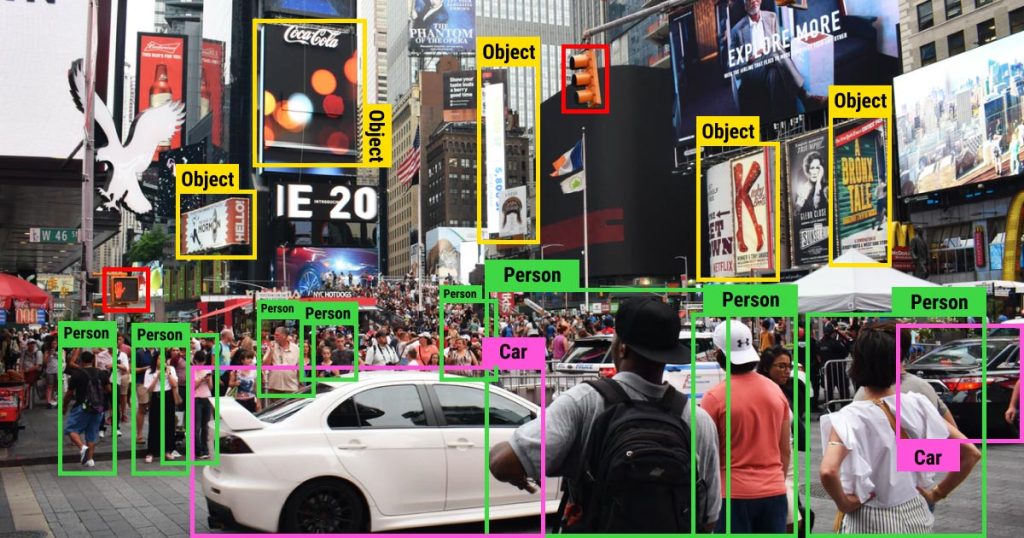
- Object Detection: This advancement facilitated the real-time recognition and tracking of objects within a visual scene. Technologies in this domain are pivotal for applications like autonomous vehicles. For instance, companies like Tesla use computer vision to detect pedestrians, traffic lights, and other vehicles on the road, making real-time decisions to ensure safety.
- Scene Understanding: This enables machines to interpret complex scenes, providing essential data for autonomous navigation. Self-driving cars, for example, integrate this ability to navigate urban settings safely and efficiently, demonstrating a profound shift in transportation.
- Augmented Reality (AR): The merging of digital information with the physical world has redefined user experiences in gaming, education, and retail. Pokémon Go, an AR game that gained immense popularity, illustrates how computer vision can enhance user engagement through simple mobile applications.
Each of these milestones has laid the groundwork for even more innovative applications. Today, industries such as healthcare utilize computer vision for diagnostic purposes, facilitating early detection of diseases through imaging technologies like MRI and CT scans. The automotive sector invests heavily in this technology to improve safety features in vehicles and enhance the driving experience. Retailers are also embracing computer vision, utilizing it for inventory management and customer insights, unlocking new levels of operational efficiency.
The integration of artificial intelligence (AI) has further accelerated this transformation. Machine learning algorithms enable systems to not only recognize patterns but also learn from visual data, fostering a feedback loop that makes machines smarter and increasingly adaptive. As we explore the nuances of human-machine interaction, the implications for society are profound and far-reaching. From ethical considerations regarding privacy and data security to the potential for job displacement, the socio-economic impact of these technologies is a topic of vital importance.
Through this article, we will delve deeper into the fascinating journey of computer vision, examining its historical context, current applications, and the exciting future possibilities that lie ahead. By understanding these advancements, we can better appreciate how they are reshaping our world and what this means for our future interactions with technology.
DISCOVER MORE: Click here to learn about innovative diagnoses and treatments
Foundational Technologies Driving Computer Vision
The evolution of computer vision can be traced through several pivotal innovations that have collectively enhanced its capabilities. Central to this journey is the integration of various technologies that have connected the dots between simple image recognition and more complex functionalities associated with human-machine interaction. The interplay between these technologies has not only expanded the potential applications of computer vision but also raised fascinating questions regarding ethics and society.
At the core of this transformation lies the advancement of machine learning algorithms. Initially, computer vision systems relied heavily on heuristic approaches, where rules were hard-coded into the software. However, as methods evolved, deep learning emerged, enabling systems to process data through artificial neural networks—an architecture that mimics the human brain. This significant leap allowed machines to learn from vast datasets rather than merely following pre-defined rules.
Consider the rapid increase in the accuracy of image classification tasks. Early algorithms achieved less than 70% accuracy in object recognition. In contrast, with the employment of convolutional neural networks (CNNs), a specialized form of deep learning, accuracy has soared well above 90%. This breakthrough has facilitated numerous applications across various sectors, including:
- Healthcare: AI-driven platforms are now capable of analyzing medical images with remarkable precision, assisting radiologists in identifying tumors or anomalies in X-rays and MRIs.
- Retail: Intelligent systems now analyze customer behavior through image analysis, allowing stores to optimize product placement based on traffic patterns.
- Security: Enhanced facial recognition systems have been implemented in law enforcement, enabling more efficient identification of suspects.
- Manufacturing: Quality assurance processes have been improved as computer vision systems automatically detect defects in products using image analysis.
As we delve deeper into the mechanisms of human-machine interaction, the relevance of natural language processing (NLP) becomes apparent. The integration of NLP into computer vision systems enables users to interact with machines using more intuitive commands. For instance, coupled with image recognition, users can simply ask a device, “What is the name of this landmark?” and receive accurate information, enhancing user experience significantly. This synergy of technologies symbolizes the dawn of an era where machines are no longer passive tools but active participants in information exchange.
On a societal scale, the implications of these advancements warrant close examination. Privacy concerns surrounding facial recognition technology have ignited debates, emphasizing the need for regulations that govern the application and deployment of computer vision systems. Meanwhile, the growing capabilities of these systems raise concerns about job displacement in certain sectors, prompting discussions about the future of work. As organizations integrate these technologies, striking a balance between innovation and ethical considerations will be essential.
The trajectory of computer vision is steeped in rapid technological advancement, marked by the journey from basic image recognition to sophisticated interfaces that facilitate enriched human-machine interaction. Understanding this evolution not only sheds light on current capabilities but also piques curiosity about the untapped potential that awaits in the realm of machine vision.
The Evolution of Technology in Computer Vision
As we delve deeper into computer vision, it’s essential to acknowledge the technological advancements that have propelled this field from simple image recognition to sophisticated human-machine interactions. These innovations have leveraged various areas, including deep learning, machine learning algorithms, and the availability of vast datasets. By utilizing these technologies, systems can achieve an unprecedented level of understanding of visual data.For instance, deep learning frameworks such as convolutional neural networks (CNNs) have revolutionized image recognition tasks, enabling machines to classify objects and detect patterns with high accuracy. This has significant implications for industries ranging from healthcare, where algorithms can assess medical imaging data, to automotive technology, where self-driving cars rely heavily on the ability to interpret their surroundings accurately.
The Growing Impact of Computer Vision Applications
Moreover, the realm of human-machine interaction has expanded significantly thanks to technologies like augmented reality (AR) and virtual reality (VR). With tools such as these, businesses are redefining customer experiences, allowing users to engage more interactively with digital content. Applications in retail, education, and training leverage computer vision to create immersive environments that enhance user engagement and learning outcomes.As we continue to explore the fusion of AI and computer vision, it is critical to consider the ethical implications and potential biases that may arise within these technologies. Ensuring that human-machine interactions are equitable and respectful will be a vital next step in developing trustworthy systems that serve society positively.
| Category | Benefits |
|---|---|
| Image Recognition | Accurate identification of objects and patterns in images. |
| Human-Machine Interaction | Enhanced user engagement through immersive experiences. |
Incorporating these elements into our understanding of computer vision highlights the profound ways it both transforms and interweaves with our daily activities. From usability in everyday applications to complex systems used in medicine and transportation, the possibilities are continually evolving. As we look ahead, the conversation about computer vision remains critical in shaping the tools and interfaces we use, making explorations in this field both timely and essential.
DISCOVER MORE: Click here to dive deeper
The Role of Data in Shaping Computer Vision
As computer vision technology has advanced, so too has the vital role of data. In the earlier days, systems were able to function adequately with relatively small datasets. However, the proliferation of digital imagery and the advent of technologies such as the Internet of Things (IoT) have ushered in an era where massive amounts of data are generated every second. To keep pace, computer vision systems now require vast datasets for training, validating, and refining their algorithms.
This dependency on data has spurred the rise of techniques like transfer learning, where models pre-trained on large datasets are fine-tuned for specific tasks with much smaller and targeted data. For example, an image classification model trained on general objects can quickly adapt to recognize plant species or rare wildlife with just a handful of new images. This flexibility is crucial in fields like environmental conservation, where gathering comprehensive datasets is often a challenge.
Moreover, crowdsourcing initiatives such as ImageNet have been instrumental in creating extensive databases that fuel research and development in computer vision. With millions of labeled images, these databases have made it possible for researchers to benchmark their algorithms effectively, propelling advancements in the field. Data annotation has evolved as a critical component of the development ecosystem, leading to companies that specialize in providing accurately labeled datasets to facilitate training.
The evolution of computer vision technologies has also been closely intertwined with the progress of edge computing. Unlike traditional cloud-based approaches, edge computing processes data closer to where it is generated, minimizing latency and increasing efficiency. This shift is particularly significant for real-time applications, such as autonomous vehicles and smart drones, where decisions need to be made almost instantaneously based on visual input.
Real-World Applications of Advanced Computer Vision
As we observe the convergence of these advanced technologies, several high-impact applications emerge, showcasing the versatility of modern computer vision systems:
- Autonomous Vehicles: Companies like Tesla and Waymo are leveraging sophisticated computer vision technologies that enable vehicles to navigate streets, detect obstacles, and make split-second decisions. Such systems process visual information from a network of cameras in real time, essentially mimicking human reflexes.
- Augmented Reality (AR)</: Firms such as Microsoft, with its HoloLens, are pioneering AR experiences where computer vision enhances user interactions with digital content overlaid on the real world. This fusion creates applications in training, design, and entertainment, bridging the physical and digital divide.
- Smart Home Devices: The proliferation of AI-powered cameras in smart homes illustrates how computer vision can improve daily life. Products like Amazon’s Echo Show utilize facial recognition to provide personalized experiences, recognizing family members and adjusting settings based on user preferences.
As these examples indicate, the integration of computer vision into everyday life is not just a trend; it fundamentally alters how we perceive and interact with our surroundings. This seamless blend of technology in daily operations fuels excitement about further advancements in human-machine interaction.
However, as technology continues to blur the lines between the digital and the physical, the need for responsible innovation becomes increasingly critical. A focus on ethical data usage, transparent algorithms, and societal implications should guide the progress of computer vision, ensuring that it benefits all corners of society. As we stand on the cusp of a new technological frontier, the combination of human ingenuity and machine capability promises to reshape industries in ways we are only beginning to understand.
DISCOVER MORE: Click here to dive deeper into real-time threat detection
Conclusion: The Future of Computer Vision
In summary, the journey of computer vision from basic image recognition to its current sophisticated applications in human-machine interaction showcases a remarkable evolution driven by technological advancements and the explosion of data. As we have explored, the capabilities of computer vision systems now extend far beyond merely identifying objects. With innovations in real-time processing, enhanced algorithms, and the fusion of various technologies, we see practical, transformative applications emerging in diverse fields such as autonomous driving, augmented reality, and smart home solutions.
However, as the reliance on data continues to grow, the imperative to address ethical considerations becomes paramount. Challenges related to privacy, data security, and algorithmic bias require careful navigation to ensure that the benefits of computer vision are equitably distributed across society. The call for responsible innovation is loud and clear, urging developers and researchers to engage with these issues head-on.
Looking forward, the horizon for computer vision is expansive. With potential breakthroughs lurking in areas such as machine learning and edge computing, we can only imagine the fascinating applications that lie ahead. From enhancing personal health monitoring to revolutionizing urban planning, computer vision is poised to impact lives in profound ways.
As we embrace this rapidly evolving technology, a curious question arises: How will we shape the relationship between humans and machines in an increasingly visual world? The answer remains contingent upon our choices today, reminding us that the future of computer vision is intricately tied to human intention and innovation.