
The Rise of AI in Creative Domains
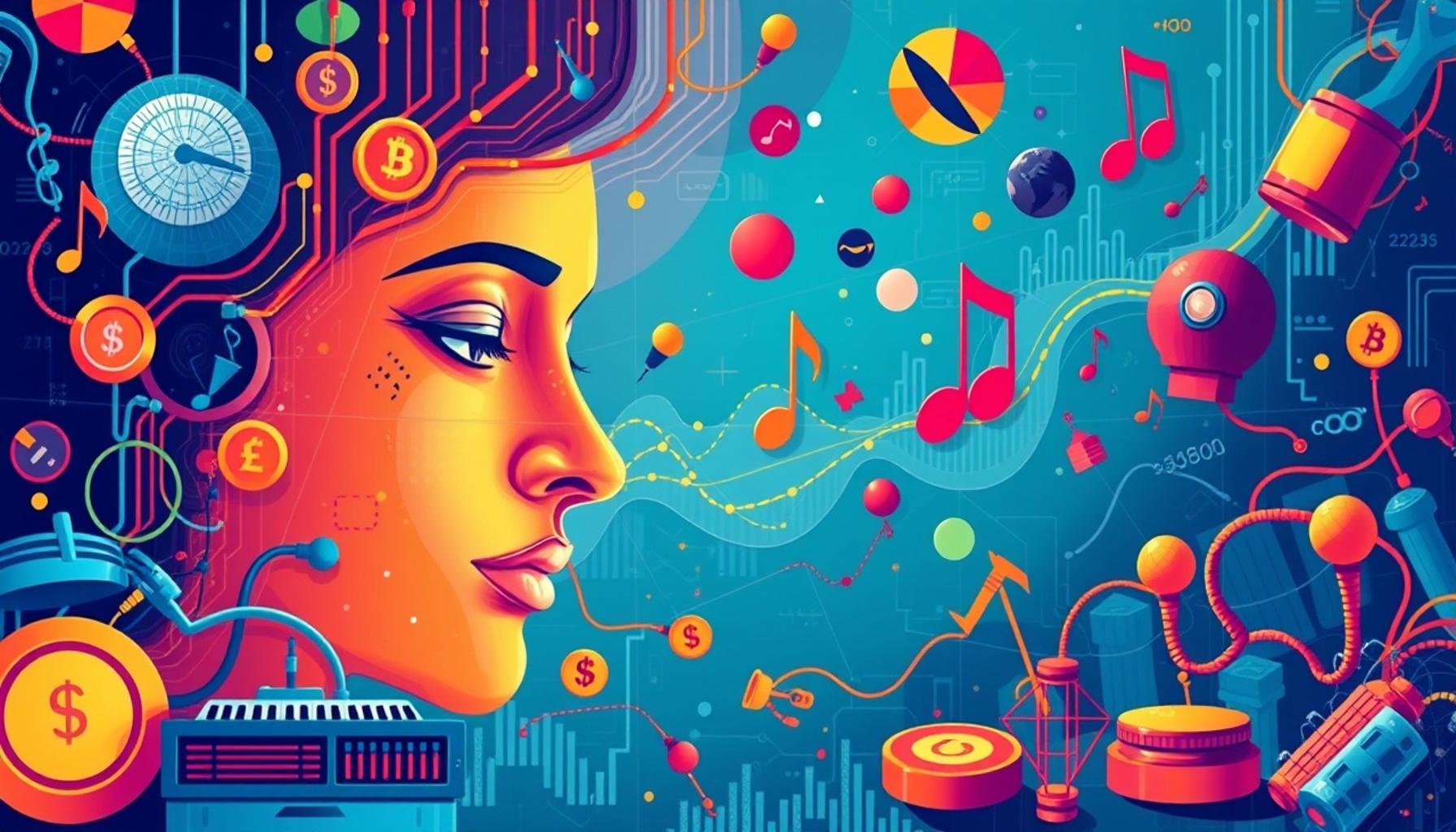
The fusion of deep learning and creativity is reshaping the landscapes of art and music in unprecedented ways. With the advent of sophisticated algorithms, artists and musicians are exploring novel avenues that push the boundaries of traditional practices. This ongoing evolution raises compelling questions: Can machines genuinely be creative? And, if so, how does this impact the way we define artistry?
In recent years, we have witnessed sensational advancements in artificial creativity, exemplified by remarkable tools and platforms. For instance, the Art Generation revolution showcases groundbreaking applications like DALL-E and DeepArt. These tools can transform simple text prompts into captivating images, allowing users to create artworks merely by describing their vision in words. An artist might type “a sunset over a futuristic city,” and within seconds, a stunning visual representation is generated, illustrating the blending of digital capabilities with creative expression. Such tools enable artists to experiment freely and inspire new directions in creativity.
Moreover, the world of Music Composition has been equally transformed. AI systems, such as OpenAI’s MuseNet, are capable of producing original songs that blend genres seamlessly—from classical to hip-hop. These systems analyze vast libraries of music, learning patterns and styles, and can even compose pieces in the style of well-known artists. For example, users can generate a song reminiscent of Beethoven infused with modern pop influences, showcasing AI’s ability to innovate while rooted in historical contexts. This innovation not only enhances the creative toolkit for musicians but also invites collaboration between human artists and AI, leading to unexpected musical creations.
Furthermore, the emergence of Interactive Experiences driven by AI technology engages audiences in different ways. Art installations that leverage artificial intelligence encourage viewers to participate, creating dynamic experiences that evolve based on audience interaction. Imagine walking into an exhibition where the art adjusts its form or color in response to viewers’ movements or facial expressions. This kind of immersive engagement redefines what it means to experience art to a level that has never been seen before.
These evolving technologies not only influence the creators but also redefine the essence of the creative process itself. As we navigate this new frontier, understanding the implications of generating art and music with algorithms becomes essential. This integration prompts discussions about the nature of creativity—whether it is a purely human trait or if it can be shared with machines.
In this article, we will further explore how deep learning does not merely imitate human creativity but actively inspires it. Join us on this captivating expedition as we uncover the fascinating world where code meets creativity, transforming the very landscape of artistic expression and musical innovation.
DISCOVER MORE: Click here to delve into the evolution of computer vision
Unlocking Artificial Creativity: How Algorithms Are Revolutionizing Art and Music
The intersection of deep learning and creativity has unleashed a wave of innovation in both visual arts and music. At the core of this transformation are algorithms that not only analyze existing creative works but also create original pieces that challenge the very definitions of artistry. Artists and musicians alike are now leveraging these tools, leading to unique collaborative opportunities that blend human intuition with machine efficiency.
One of the most significant advancements in this domain is the use of Generative Adversarial Networks (GANs). GANs consist of two neural networks—the generator and the discriminator—that work in tandem to produce high-quality outputs. The generator creates images or sounds, while the discriminator evaluates them, pushing the generator to refine its creations continually. This iterative process has resulted in stunning artwork and intricate compositions, often indistinguishable from those created by human hands. The implications are profound, as these technologies engage the audience in a dialogue about authenticity and the value of creativity.
To better understand the breadth of these innovations, consider the following categories in which deep learning is actively generating art and music:
- Image Generation: Platforms like Artbreeder allow users to blend images and control various attributes, resulting in entirely new and captivating artworks.
- Style Transfer: Algorithms can take a base image and apply the style of a famous artist—think of a modern photograph reimagined in the style of Van Gogh’s brushstrokes.
- Musical Composition: AI systems like AIVA and Jukedeck can compose background music for videos, providing creators with instant access to unique scores tailored to their projects.
- Sound Design: Technologies such as Google’s NSynth enable musicians to create new sounds by combining existing audio files, expanding the sonic palette for various genres.
Moreover, the impact of algorithms on creative practices extends beyond mere creation. Musicians are using AI to analyze audience feedback in real-time, allowing them to adapt their performances dynamically. For instance, live concerts can incorporate AI that modifies music based on crowd reactions, creating a more interactive and engaging experience. This adaptability encourages deeper connections between artists and their audience, redefining the live music experience.
As these technologies continue to evolve, the conversation around the essence of creativity deepens. Are algorithms simply tools for amplification, or do they possess an inherent creative spark? This inquiry is essential as we navigate the implications of machines generating art and music, leading to discussions that challenge our understanding of creativity in the modern age. The potential for collaboration between human artists and AI signifies a new era where creativity is not solely confined to the human experience but is expanded through innovation and technology.
In the subsequent sections of this article, we will delve further into the mechanisms driving these advancements and the profound questions they raise about the nature of creativity itself.
| Advantage | Description |
|---|---|
| Enhanced Creativity | Deep learning algorithms can process vast amounts of data, enabling them to generate unique and innovative artistic expressions that might not be feasible for human creators. |
| Accessibility | Using AI tools, individuals who may lack traditional artistic training can easily create compelling art and music, democratizing the creative process and fostering a new wave of artists. |
| Collaborative Opportunities | Artists can collaborate with AI systems to refine their works, blending human intuition with machine precision, leading to hybrid creations that push the boundaries of traditional art forms. |
| Rapid Prototyping | Artists can utilize deep learning algorithms to quickly prototype ideas, allowing for a swift exploration of concepts and facilitating a more iterative creative process. |
The intersection of deep learning and artificial creativity holds immense potential for transforming how art and music are produced. As algorithms evolve, so does the dialogue surrounding creativity, authorship, and the role of technology in artistic expression. Each advantage presents an opportunity for exploration and experimentation, inviting both seasoned and novice creators into a vibrant world where AI and human storytelling converge. In this landscape, the urge to understand and harness these technologies will likely drive conversations and innovations in the realm of artistic creativity. By embracing such advancements, one can tap into a rich vein of possibilities that inspire not just creation, but rejuvenation of the arts.
DISCOVER MORE: Click here to learn about the evolution of computer vision
The Collaborative Frontier: Examining the Role of Human Intuition in Algorithmic Artistry
The capacity for deep learning algorithms to generate art and music opens a fascinating conversation about the nature of collaboration between humans and machines. While AI-driven tools have demonstrated a remarkable ability to produce outputs that mimic established styles and genres, the role of the human artist becomes increasingly crucial. This collaboration reaches beyond the mere use of technology; it becomes a symbiotic relationship where creativity is defined not just by the outcomes but by the process and interaction involved.
One compelling example is the work of artist and researcher Mario Klingemann, who utilizes neural networks to explore new realms of creativity. Through his practice, Klingemann showcases how human direction and intervention shape the outputs of AI, emphasizing that while the algorithm can generate patterns, it is the artist’s vision that guides the final artwork. This dynamic interplay illustrates the potential for artists to leverage technology to enhance their creative expression, rather than replace it.
Beyond individual artists, collaborative projects are also popping up across the United States that embrace the intersection of human and machine creativity. For instance, the Obvious Art Collective gained worldwide attention when one of their AI-generated artworks, “Edmond de Belamy,” was auctioned at Christie’s for $432,500. This event sparked conversations about authorship in art—if a machine creates a piece with human oversight, who rightfully earns the title of ‘artist’? Such cases challenge traditional perceptions of creativity, urging us to rethink ownership, production, and appreciation in the art world.
The field of music is equally fertile for investigation. The composer Holly Herndon integrates AI into her musical processes, employing a software called “Sprawl” that listens and learns from Herndon’s own vocal techniques. By combining her live performances with the AI’s interventions, she creates an innovative soundscape that expands the boundaries of what music can be. This approach captures the essence of collaboration; Herndon infuses the algorithm with her musicality while allowing it to surprise her with its unique contributions.
Within the context of education and community engagement, art and music schools in the U.S. are beginning to incorporate AI tools in their curricula. By teaching students to work alongside algorithms, institutions empower the next generation of artists to harness these technologies creatively. This establishes a foundation where future creators will understand not only how to manipulate algorithms but also how to think critically about the ethical implications and societal impacts of their work.
Meanwhile, discussions about the emotional resonance of AI-generated works continue to unfold. Can an algorithm ever truly replicate the human experience of suffering, joy, or nostalgia that often informs art and music? As creators grapple with these existential questions, the dialogue between humans and algorithms becomes a rich area for exploration, prompting further inquiry into what it means to be an artist in an age where machines are entering the fray.
As we observe the evolving landscape of artistic creation, the essential interplay between algorithmic outputs and human sensibility will continue to shape our understanding of creativity. These relationships point not only to newfound possibilities but also to deeper questions about our role as consumers, curators, and creators in a world increasingly influenced by artificial intelligence.
DIVE DEEPER: Click here to discover the evolution of computer vision
Embracing the Future of Creativity
The landscape of art and music is undergoing a remarkable transformation with the rise of deep learning algorithms and artificial creativity. As we explore this uncharted territory, it is essential to recognize the collaborative nature of innovation—where human intuition and machine capabilities intersect to forge new artistic expressions. The examples of artists like Mario Klingemann and Holly Herndon illustrate that AI does not merely replace human creativity; instead, it complements and expands it, leading to unforeseen possibilities that challenge our traditional definitions of artistry.
As educational institutions in the U.S. increasingly incorporate AI tools into their curricula, the next generation of creators is being equipped to navigate this complex environment thoughtfully and ethically. This phenomenon lays a foundation for artists who will not only harness technology but reflect on its societal impacts, fostering a deeper understanding of both algorithmic outputs and human emotion.
Moreover, as we confront questions regarding authorship, ownership, and the emotional depth of AI-generated works, the dialogue around artificial creativity invites us to reconsider what it truly means to create. In this era where machines coalesce with human vision, we are challenged not just to marvel at the outcomes but to engage critically with the processes that bring them to life. As we stand at this exhilarating crossroads, the future of creativity is not limited by machines; instead, it holds the promise of an enriched artistic landscape, long-lasting collaborations, and a broader understanding of what creativity encompasses. As we continue to pose these thought-provoking questions, we invite you to delve deeper into the captivating world of deep learning and artificial creativity.