
Transformations in Medical Diagnostics and Treatment
Deep learning, a subset of artificial intelligence, has made significant strides in the healthcare sector, changing the way practitioners approach medical challenges. By utilizing sophisticated algorithms and neural networks, deep learning systems can process and analyze enormous datasets quickly and with remarkable accuracy. This technological advancement facilitates improved patient care by enabling doctors to make better-informed decisions based on comprehensive insights derived from data.
One notable area where deep learning shines is medical imaging. For instance, systems like Google’s DeepMind have exhibited an ability to interpret medical images—such as X-rays, CT scans, and MRIs—at levels comparable to seasoned radiologists. These algorithms can detect anomalies such as tumors or fractures far more quickly than a human eye, often revealing conditions in early stages, leading to earlier and potentially lifesaving interventions. Such applications exemplify how technology not only augments existing practices but can also redefine diagnostic accuracy.
Another vital application is predictive analytics. With access to historical patient data, deep learning models can uncover trends and predict health outcomes. For example, hospitals are using AI to anticipate patient admissions, allowing for better resource management and staffing. This kind of anticipatory analysis is paramount; it helps mitigate the impact of seasonal flu or other public health crises by preparing healthcare systems ahead of time. Research shows that predictive models can lead to a decrease in patient readmissions, which is not only beneficial for hospital efficiency but also for patient recovery.
Deep learning also plays a crucial role in personalized medicine. By analyzing genetic information alongside clinical data, AI can identify the most effective treatments tailored to individual patient profiles. This shift towards precision medicine is evident in developments such as gene therapy for cancer treatment, where patients receive tailored therapies that significantly improve outcomes and minimize side effects. Institutions like the Cleveland Clinic are pioneering the incorporation of such personalized treatment plans, reflecting a broader trend across top medical facilities in the United States.
The impact of these advancements is profound. A recent survey found that 88% of healthcare executives anticipate that AI will fundamentally transform the industry within just five years. This places deep learning at the forefront of a revolution that promises not only to enhance patient outcomes but also to streamline healthcare operations, reducing costs while increasing access to quality care.
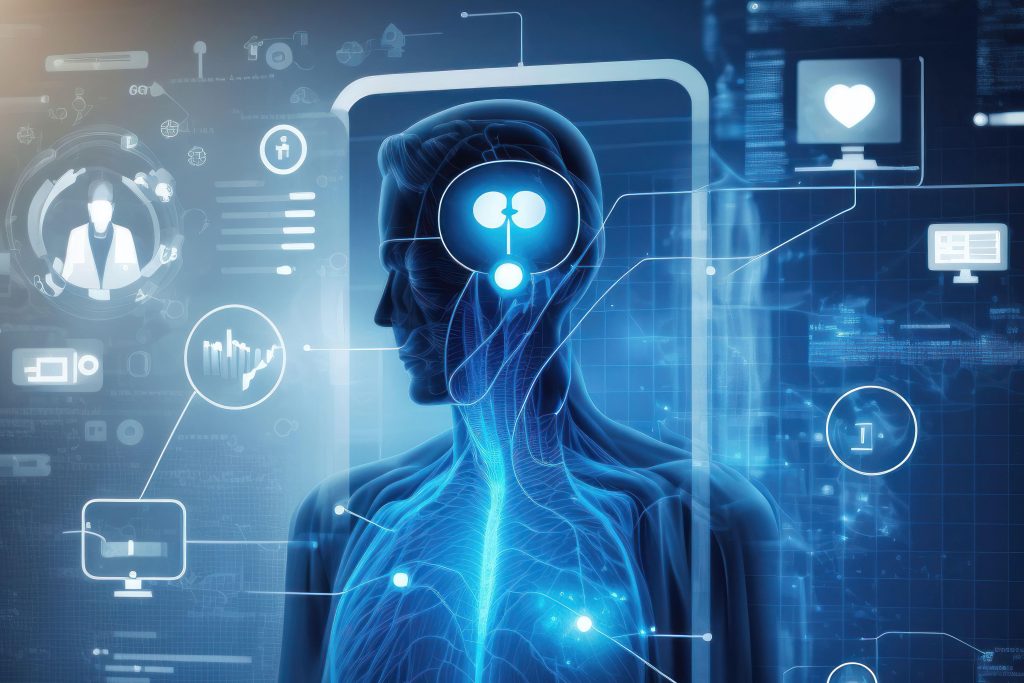
As we look ahead, the potential of deep learning to revolutionize patient care is undeniable. From improving diagnostic accuracy to facilitating innovative treatment methodologies, the continued integration of this technology into healthcare practices signals a future ripe with possibilities for better patient experiences and enhanced public health. The exploration of deep learning in healthcare is just beginning, and its implications for the medical field are worth paying attention to, as they hold the keys to a more efficient and effective healthcare system.
DISCOVER MORE: Click here to dive deeper
Revolutionizing Diagnostic Techniques
As a pivotal tool within the realm of healthcare, deep learning has ushered in a new era of diagnostic techniques that are not only faster but more precise. Medical professionals are increasingly relying on AI-driven solutions to assist in interpreting complex data. With algorithms capable of analyzing thousands of medical images, patterns that may elude even the most trained professionals can be detected, resulting in enhanced diagnostic capabilities.
A tangible example of this transformation is found in the field of radiology. Traditional methods of interpreting X-rays, CT scans, and MRIs can be time-consuming and prone to human error. However, systems powered by deep learning have demonstrated their efficacy in identifying and classifying conditions such as pneumonia, breast cancer, and neurological disorders. A study from the University of California, Berkeley, showcased an AI model that not only matched but in some cases exceeded the performance of radiologists when identifying lung cancer on imaging scans. This accuracy has the potential to lead to earlier treatment plans, fundamentally changing patient prognoses.
In addition to imaging analysis, deep learning has found its place in pathology. Here, algorithms can scrutinize biopsy samples, recognizing minute changes in tissue structure that might indicate the presence of malignancies. This not only speeds up the diagnosis but also increases the reliability and consistency of pathology reports, enhancing the overall treatment planning process. The potential to reduce the time taken for diagnosis from weeks to mere days can be a game-changer for patients facing potentially life-threatening conditions.
Enhanced Prediction of Health Outcomes
Beyond diagnostics, deep learning algorithms are revolutionizing how the healthcare industry approaches patient outcomes. Through the analysis of vast patient datasets, these systems can identify trends that inform treatment decisions. Predictive analytics in healthcare is gaining traction, as clinicians aim to foresee complications and tailor interventions accordingly.
Consider the capabilities of deep learning in managing chronic diseases such as diabetes. By mining historical data, AI can predict the likelihood of acute complications, allowing healthcare professionals to intervene preemptively. Hospitals across the United States have started implementing predictive models to optimize their clinical workflows. Here are some key benefits of adopting these models:
- Resource Optimization: With accurate predictions, hospitals can allocate resources more effectively, ensuring that staffing and operational costs are managed efficiently.
- Reduced Readmission Rates: By anticipating complications, healthcare systems can provide timely interventions, resulting in fewer readmissions and better patient outcomes.
- Personalized Patient Care: Understanding individual risk profiles allows providers to tailor treatment plans, improving adherence and overall satisfaction.
The application of deep learning in predictive analytics represents a pivotal shift towards preventative healthcare, altering how diseases are managed across diverse patient populations. As healthcare organizations embrace these cutting-edge technologies, the potential to transform patient care continues to grow, influencing both clinical outcomes and operational efficiencies.
| Category | Description |
|---|---|
| Enhanced Diagnostics | Deep learning algorithms analyze medical images with >90% accuracy, detecting conditions that may slip through human analysis. |
| Personalized Treatments | AI systems tailor treatments based on individual patient data, optimizing outcomes and reducing side effects. |
The realm of healthcare is rapidly evolving with the integration of artificial intelligence. Deep learning, a subset of AI, allows for intricate analysis of medical images, vastly improving the accuracy of disease detection. For instance, algorithms can identify tumors and anomalies more precisely than traditional methods, potentially changing the outcomes for conditions like breast cancer and pneumonia. This affects patient management and monitoring in profound ways, as early diagnosis can lead to timely interventions.Another significant advantage lies within personalized treatment plans. By leveraging vast amounts of data, AI-driven systems adapt treatments to fit the unique characteristics of each patient. This capability not only aims to enhance efficacy but also strives to minimize adverse effects, thereby improving the overall healthcare experience. Such advancements represent a merging of technology and medicine that is reshaping patient care paradigms, offering a glimpse into a future where AI could be a significant ally in battling chronic diseases. Indeed, as research delves deeper into these technologies, the implications for healthcare will continue to broaden, inviting further exploration of their potential shifts in clinical practices.
DISCOVER MORE: Click here to dive deeper
Streamlining Treatment Plans through Personalized Medicine
One of the most groundbreaking applications of deep learning in healthcare is its role in facilitating personalized medicine. The concept of tailoring treatment based on an individual patient’s genetic and phenotypic data is increasingly becoming a reality, thanks largely to the sophistication of AI algorithms. By analyzing a patient’s unique genetic makeup along with their medical history, deep learning models can predict how they will respond to various treatments, paving the way for more effective and targeted therapies.
A prime example of this innovation can be seen in oncology, where deep learning algorithms analyze genomic data to identify potential mutations driving cancer progression. Organizations like Tempus and Guardant Health are at the forefront, employing these technologies to facilitate precision oncology. Their systems can analyze millions of genetic sequences and correlate them with treatment outcomes, thereby revolutionizing how oncologists approach therapy selection. A study by the American Society of Clinical Oncology demonstrated that patients whose treatments were guided by genomic data had significantly improved outcomes compared to those receiving standard treatments.
Optimizing Surgical Procedures
In addition to enhancing individualized treatment, deep learning is also making strides in the realm of surgery. AI algorithms can assist in complex surgical procedures by providing insights and recommendations based on past surgical outcomes and best practices. For instance, robots equipped with deep learning capabilities can analyze real-time data during a procedure, such as a surgeon’s hand movements and the patient’s anatomical features. This aids in increasing precision and reducing the risk of complications.
Recent developments have shown remarkable results in areas like orthopedic and neurosurgery. Surgeons can utilize AI-driven imaging tools to enhance their decision-making processes, leading to fewer errors and enhanced recovery rates. A notable case is the collaboration between surgical teams and AI systems that predict postoperative complications. By integrating these predictive models, hospitals have successfully reduced complications by up to 30%, translating into better outcomes for patients.
Augmenting Patient Engagement and Adherence
Beyond diagnostics and treatment planning, deep learning is proving invaluable in fostering patient engagement. Through tailored applications and platforms, patients can access health information that resonates with their specific conditions. Chatbots and virtual health assistants, powered by deep learning, can answer patient queries in real-time, providing them with crucial information on medication, symptoms, and health management.
These tools play an essential role in improving patient adherence to prescribed protocols. For instance, a comprehensive analysis by the CDC highlighted that personalized reminder systems developed through deep learning can significantly impact medication adherence rates, raising them by more than 30%. This greater level of engagement ultimately leads to improved health outcomes and reduced healthcare costs.
As healthcare institutions continue to harness the potential of deep learning, the horizon for optimizing treatment plans looks increasingly promising. Patients not only stand to benefit from improved accuracy in diagnostics but also from tailored therapies and enhanced support systems, ultimately redefining the patient experience within the healthcare system.
DISCOVER MORE: Click here to learn about real-time threat detection
Conclusion
As we navigate through the rapidly evolving landscape of healthcare, it is evident that deep learning is not just a fleeting trend but a transformative force redefining diagnoses and treatments through artificial intelligence. From personalized medicine that tailors therapies to the unique genetic and phenotypic profiles of patients, to enhancing surgical precision and optimizing surgical procedures with predictive analytics, deep learning’s potential seems boundless. These advancements are not merely about clinical outcomes; they represent a significant shift towards patient-centered care, ensuring individuals receive tailored solutions that cater to their specific health needs.
Moreover, the integration of AI-driven technologies into routine practice encourages improved patient engagement, fostering a collaborative relationship between healthcare providers and patients. As evidenced by various studies, such as those conducted by the CDC, the ability to leverage personalized reminders and virtual assistants results in better adherence to treatment protocols, ultimately translating into superior health outcomes and reduced costs.
Looking ahead, healthcare professionals, institutions, and policymakers must remain committed to harnessing the full capabilities of deep learning technologies. Collaboration between tech innovators and healthcare providers will be crucial to not only refine existing algorithms but also to address ethical concerns and ensure equitable access to these advancements. As we continue to explore this sophisticated yet promising field, the future of healthcare, driven by artificial intelligence, stands as a beacon of hope for reimagining patient care and advancing public health.