
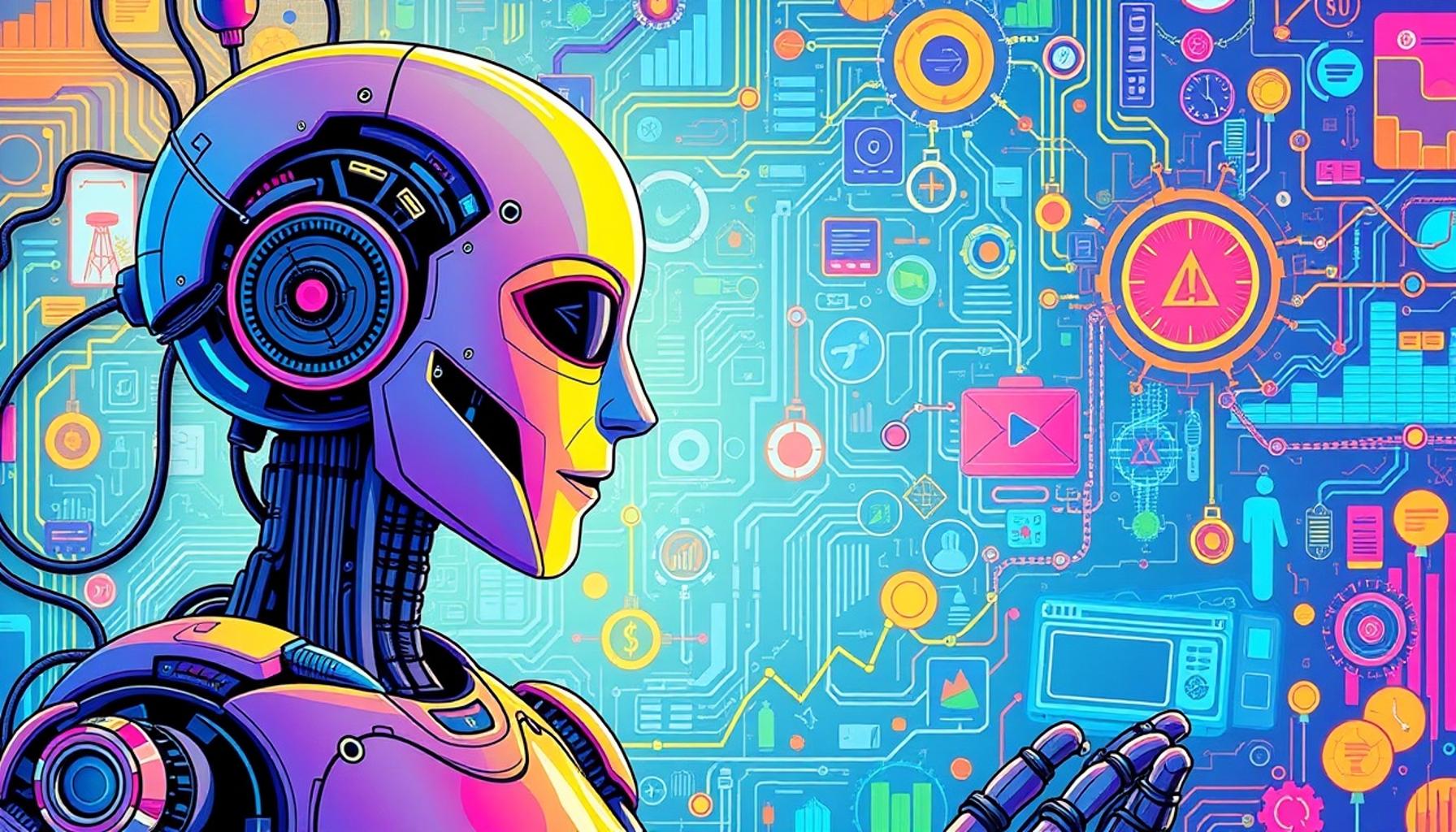
The Rise of Autonomous Intelligent Systems
The rapid advancement of deep learning technologies has transformed various industries, but its integration with robotics signifies a leap toward truly autonomous systems. This convergence represents not just an enhancement of existing technologies but a fundamental shift in how machines operate, learn, and interact with their environments and human operators. As machines become smarter through sophisticated algorithms and neural networks, the quest for autonomy elevates their capabilities in unprecedented ways. This synergy enhances performance and raises intriguing questions about the future landscape of intelligent machines.
Numerous applications have emerged at this intersection, showcasing the potential of intelligent machines in real-world scenarios. Some noteworthy examples include:
- Autonomous Vehicles: Self-driving cars, like those being developed by Tesla and Waymo, utilize deep learning for navigation, image recognition, and obstacle detection. These vehicles continuously learn from vast amounts of data collected from sensors, allowing them to make real-time decisions similar to a human driver.
- Robotic Surgery: Precision robots, such as the da Vinci Surgical System, utilize machine learning algorithms to assist in complex medical procedures. These systems can analyze surgical data and improve their techniques, resulting in minimally invasive operations that enhance patient recovery times.
- Industrial Automation: Smart robots revolutionize manufacturing processes. Companies like Boston Dynamics have created robots that can adapt to dynamic environments, enhancing operational efficiency and significantly improving safety by taking over dangerous tasks, thus reducing workplace injuries.
The ability of machines to learn from their surroundings enables them to exhibit adaptive behavior, making them seem more intelligent and efficient. Factors such as enhanced sensory perception, decision-making capabilities, and the development of human-like interactions are becoming increasingly significant. As we delve deeper into this fascinating field, it becomes crucial to explore:
- The algorithms powering these innovations, such as convolutional neural networks and reinforcement learning, which facilitate how machines perceive and respond to their environment.
- The ethical implications of autonomous robotics, encompassing concerns about privacy, accountability, and decision-making processes, especially in critical applications like military drones or autonomous healthcare.
- The potential impact on employment and society, including job displacement in sectors like manufacturing and transportation versus the creation of new job opportunities in tech and maintenance of these intelligent systems.
This exploration invites us to question not just where these machines are capable of going, but also what their existence means for our future interaction with technology. Understanding the nuances of deep learning and robotics will be pivotal in shaping a society that embraces intelligent machines while addressing the challenges they bring. The journey ahead promises to be as captivating as the technologies themselves.
DISCOVER MORE: Click here to dive deeper
Unpacking Deep Learning Algorithms in Robotics
At the core of the intersection between deep learning and robotics lies a suite of advanced algorithms that empower machines to learn from data and improve their performance over time. One of the most pivotal advancements in this domain is the incorporation of convolutional neural networks (CNNs). These networks excel in visual tasks, enabling robots to recognize and interpret complex images from their surroundings. For instance, a robotic arm employed in manufacturing can utilize CNNs to identify parts, ensuring precision during assembly tasks, dramatically reducing human error.
Another crucial algorithm making waves in the field is reinforcement learning. This method allows robots to learn optimal behaviors through a system of rewards and penalties, mimicking a trial-and-error learning process. In autonomous vehicles, for example, reinforcement learning algorithms are employed to navigate urban environments. These vehicles learn which driving actions yield favorable results, allowing them to refine their decisions in real time, enhancing safety and efficiency.
Furthermore, the combination of these powerful algorithms with advanced sensor technologies—such as LiDAR and cameras—provides robots with an enhanced sensory perception. This multi-faceted perception mechanism allows for a better understanding of the intricacies of their operational environment. Here are several significant areas where this combination has reshaped expectations of machine intelligence:
- Real-Time Adaptation: Deep learning enhances a robot’s ability to adapt in real-time, meaning the robots can respond to changing conditions such as adjusting their path on-the-fly while navigating through crowded or unpredictable areas.
- Human-Robot Interaction: By using natural language processing (NLP), intelligent machines can understand and respond to human commands, which is a significant leap forward for sectors like customer service and healthcare.
- Environmental Awareness: Robots equipped with deep learning algorithms can recognize objects, interpret scenes, and make informed decisions based on these observations, effectively bridging the gap between machine vision and cognition.
Such advancements contribute to a growing belief that these intelligent machines can not only filter through data but also become integral problem solvers across different industries. The future of autonomous robotics is teetering on the brink of an unprecedented explosion of capability, facilitated by deep learning innovations. However, this promises a dual-edged sword, as each technological leap raises critical questions about reliability, transparency, and ethical considerations surrounding machine autonomy.
As we continue to explore the implications of deep learning on robotic autonomy, it becomes increasingly essential to scrutinize the deeper facets of these algorithms and how they are being harnessed. The dual concepts of learning and autonomy in intelligent machines propel us toward contemplating the broader impact of these technologies on society, labor, and our relationship with machines. The implications beckon further inquiry into how we will integrate these autonomous systems into our daily lives, and how we can ethically align their development with human values.
| Advantages | Impact on Society |
|---|---|
| Enhanced Automation | Increased efficiency across multiple sectors, from manufacturing to healthcare. |
| Improved Decision-Making | Robots equipped with deep learning can analyze data for faster, more accurate decisions. |
The marriage of deep learning and robotics marks a revolutionary shift in how intelligent machines perceive and interact with their environments. One of the remarkable implications of this integration is the enhanced automation that arises from the ability of machines to learn from data. Industries can leverage this technology to boost productivity by streamlining production processes, reducing costs, and minimizing human error. For instance, autonomous drones can now perform complex agricultural tasks, optimizing resource use and enhancing crop yield, demonstrating the profound capabilities of such intelligent machines.Moreover, the synergy between deep learning and robotics significantly improves decision-making processes. Machines can now evaluate vast databases at unprecedented speeds, extracting insights that lead to better operational strategies. In the medical field, this means robots can assist in diagnostics, providing recommendations based on patient data far more rapidly than traditional methods. As we delve deeper into this exploration of autonomy in machines, the potential highlights a transformative future that ultimately benefits mankind, prompting us to consider the ethical frameworks that will govern their use.
DISCOVER MORE: Click here to delve into the synergy of technology and sustainability
Transformative Use Cases in Diverse Industries
The convergence of deep learning and robotics is not merely a theoretical concept; it has produced palpable advances across various sectors, redefining operational paradigms. Industries ranging from healthcare to logistics are experiencing transformative shifts, driven by intelligent machines that utilize deep learning technologies to operate more efficiently and effectively.
In the realm of healthcare, robots equipped with deep learning algorithms are revolutionizing surgical procedures. For instance, surgical robots enhance precision and minimize invasiveness, allowing for faster recovery times. Their deep learning capabilities enable these machines to analyze vast amounts of medical imaging data, aiding in diagnosis and pre-surgical planning. One notable example is the da Vinci Surgical System, which utilizes machine learning for various surgical procedures, enhancing both outcomes and patient safety. Coupled with real-time data analytics, these robotic systems can adapt to evolving surgical conditions, surpassing human possibilities in terms of speed and accuracy.
Moreover, the logistics and supply chain sector is experiencing a seismic shift with the integration of autonomous robots. Amazon, for instance, leverages deep learning to create smarter warehousing solutions. Their Kiva robots utilize complex algorithms to navigate through vast and complicated environments, optimizing inventory management. These robots learn from past experiences, optimizing their paths within the warehouses, saving time and resources, and significantly reducing operational costs. In the context of last-mile delivery, other companies are experimenting with autonomous delivery robots that also leverage deep learning to navigate urban landscapes, enhancing efficiency by making the delivery process more straightforward and error-resistant.
The automotive industry is perhaps one of the most visible beneficiaries of the intersection of deep learning and robotics. Major companies, such as Tesla and Waymo, are continually advancing their autonomous vehicle technologies through these frameworks. By utilizing deep learning techniques in their navigation systems, vehicles can learn to detect and respond to pedestrians, cyclists, obstacles, and other vehicles, significantly improving safety outcomes. These advancements in self-driving technology not only aim to reduce accidents but also promise to reshape urban planning and commuting experiences in American cities, making transportation more accessible and efficient.
Furthermore, the agricultural sector is reaping the benefits of intelligent machines empowered by deep learning. Precision agriculture employs robots that can analyze soil conditions, monitor crop health, and automate tasks like planting and harvesting. Drones equipped with advanced sensing technologies collaborate with deep learning algorithms to provide farmers with critical insights, leading to increased yields and reduced environmental impact. This integration illustrates how the intersection of robotics and deep learning is fostering sustainable practices in vital industries.
These case studies highlight the vast potential of deep learning and robotics, showcasing how intelligent machines can significantly improve productivity, enhance safety, and increase operational efficiency. However, while these advancements are promising, they also raise the need for comprehensive discussions around the regulatory landscape, data privacy, and the ethical ramifications of machine autonomy. As we embark upon an era characterized by intelligent machines that learn and operate autonomously, continuous examination of their societal impact will be paramount to harness their full potential safely and responsibly.
DISCOVER MORE: Click here to learn about deep learning in autonomous vehicles
Embracing the Future of Intelligent Machines
The exploration of deep learning and robotics reveals a fascinating interplay that is not only transforming industries but also redefining the very fabric of operational efficiency and autonomy. As we have seen through various sectors—from the precision of healthcare robots in surgery to the dexterity of autonomous vehicles navigating busy streets—the integration of advanced machine learning techniques is achieving remarkable outcomes. These intelligent machines are not just enhancing processes; they are setting new standards for what is possible in automation and decision-making.
However, with these advancements come pressing challenges that warrant our attention. Issues surrounding data privacy, ethical machine usage, and the regulatory framework governing these technologies remain pivotal considerations. As society becomes increasingly reliant on intelligent machines, fostering public discourse around their implications will be essential to ensure their responsible deployment. Moreover, as companies from Amazon to Tesla continue to innovate, there lies an opportunity for policymakers to create guidelines that promote safety, equity, and accessibility for all.
Ultimately, the intersection of deep learning and robotics heralds a new era where autonomous systems will continue to evolve, learning from their environments in ways once imagined only in science fiction. As we venture further into this promising landscape, the prospect of enhanced productivity, improved safety, and sustainable practices across diverse industries beckons us to both embrace and scrutinize this technological revolution. The road ahead is one filled with potential—one that invites researchers, businesses, and society to shape the ethical application of these intelligent machines for a better future.