

The Transformation of Transportation
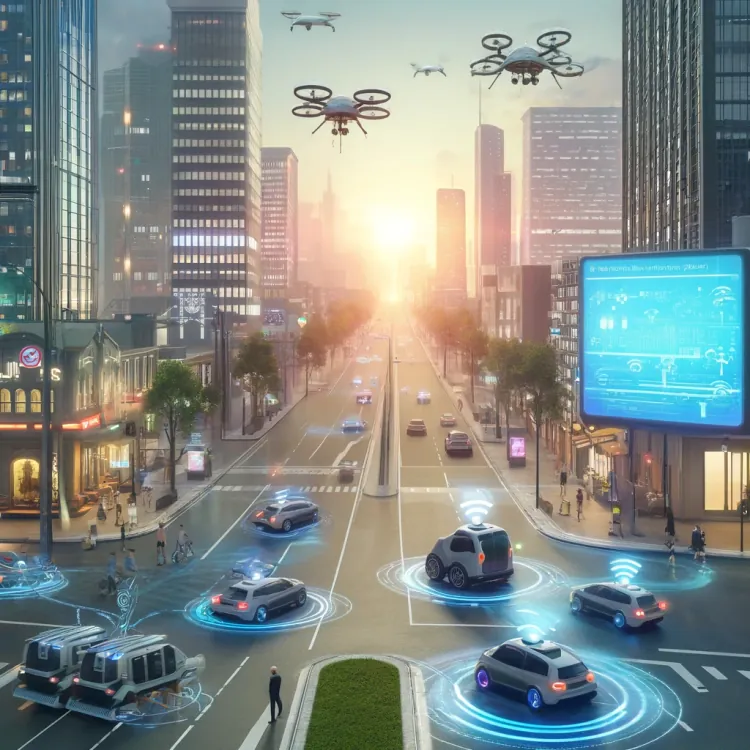
The landscape of transportation is undergoing a seismic shift. With the advent of deep learning, autonomous vehicles are no longer fueled by mere science fiction fantasies; they are quickly becoming a palpable reality. This transformation not only promises to revolutionize how we travel but also carries out profound implications for urban planning, public policy, and overall road safety.
This revolution is driven by advanced algorithms and vast data processing capabilities, enabling vehicles to perceive and adapt to their environments in ways previously unimaginable. A critical examination reveals several key features enhancing autonomous driving:
- Computer Vision: Deep learning models analyze visual data from cameras to recognize various objects, including cars, pedestrians, and traffic signs. For instance, using convolutional neural networks (CNNs), autonomous systems can accurately process images to identify a stop sign from hundreds of feet away, ensuring timely responses.
- Sensor Fusion: Integrating data from various sensors, such as LiDAR and radar, creates a comprehensive view of the surroundings. This synergy enhances understanding of complex environments, allowing vehicles to function effectively in diverse settings, from busy city streets to rural landscapes.
- Predictive Analytics: Algorithms are being developed that can anticipate potential hazards, predicting the actions of surrounding vehicles or pedestrians based on past behavior. For example, if a child is playing near the roadway, predictive models can adjust vehicle speed preemptively based on the child’s movement patterns.
In the United States, major automotive companies and tech giants are investing heavily in this technology. Notably, companies like Google’s Waymo and Tesla are at the forefront, showcasing the incredible capabilities of deep learning in real-world scenarios. Waymo’s autonomous minivans have already accumulated millions of self-driven miles on the streets of Arizona, effectively serving as both a transportation solution and a testing ground for the technology.
The fusion of deep learning with machine learning and artificial intelligence opens new avenues for innovation in safety, efficiency, and user experience in transportation. Public perception of these vehicles is gradually shifting, with growing acceptance as more autonomous cars navigate American roads, often accompanied by an increased emphasis on data privacy and accountability.
As researchers continue to refine these technologies, the future of driving promises to be not only safer but also more efficient than ever before. Higher levels of automation could lead to reduced traffic congestion, lower accident rates, and an overall reduction in environmental impact, significantly reshaping how we approach urban mobility. The onus now lies on regulatory frameworks and societal acceptance to keep pace with technological advancements, paving the way for a new era in transportation.
DISCOVER MORE: Click here to dive deeper
Deep Learning: A Catalyst for Autonomous Vehicle Intelligence
As the journey towards full vehicle automation unfolds, deep learning emerges as a cornerstone technology, radically enhancing the intelligence of autonomous systems. This subset of artificial intelligence enables machines to learn from vast amounts of data, improving their capabilities exponentially over time. In the context of autonomous vehicles, deep learning facilitates several critical functions that contribute to their operational efficacy and safety.
An essential aspect of deep learning in autonomous vehicles is its ability to process and interpret sensory data. The integration of advanced neural networks allows vehicles to analyze their surroundings with remarkable accuracy. This involves the interpretation of complex data streams from various inputs, such as cameras, LiDAR sensors, and radar. The continuous feedback loop established by deep learning algorithms means that the systems grow smarter with each mile driven, effectively adapting to new environments and driving conditions.
Key Areas of Impact
To appreciate the transformative role of deep learning in the advancement of autonomous vehicles, it is critical to examine specific domains where this technology creates a tangible impact:
- Enhanced Situational Awareness: Deep learning algorithms can simultaneously analyze multiple sensory inputs to construct a 360-degree view of the environment. By accurately detecting and categorizing obstacles and lane markings, vehicles can navigate through complex scenarios with increased precision. This results in a heightened awareness of potential dangers and the surrounding traffic dynamics.
- Improved Decision-Making: In the ever-changing landscape of road conditions, deep learning empowers vehicles to make real-time decisions. By evaluating various scenarios and weighing potential outcomes, autonomous systems can determine the safest and most efficient path forward, even in high-pressure situations. For instance, when facing an unpredictable situation like a sudden lane change by another driver, a deep learning model can quickly assess the situation and execute a safe maneuver.
- Adaptive Learning: One of the most revolutionary aspects of deep learning is its ability to learn from user behavior and external conditions continually. This feature enables vehicles to adapt to the driving habits of individuals or regional differences in road usage, leading to a more personalized and efficient driving experience. Such adaptability not only enhances user satisfaction but also promotes greater safety as the vehicle adjusts to the nuances of varied driving environments.
Furthermore, the collaboration between deep learning techniques and other technologies, such as V2X (Vehicle-to-Everything) communication, creates a synergistic effect, enriching the data pool available for machine learning models. By sharing information with infrastructure and other vehicles, autonomous systems can anticipate events on the road, fostering improved safety and traffic efficiency.
The expansive capabilities of deep learning are steadily bridging the gap between human-driven and autonomous vehicles. As the technology matures and regulatory frameworks evolve, society stands on the brink of a transportation revolution, driven by safer, smarter, and more efficient autonomous systems.
The Role of Deep Learning in Shaping Autonomous Vehicles
Deep learning has emerged as a cornerstone technology driving the evolution of autonomous vehicles, revolutionizing how they perceive, interpret, and interact with their environment. This technology has contributed significantly to the advancement of features such as computer vision and sensor fusion, which are pivotal for vehicle safety and navigation. Firstly, deep learning enhances the ability of autonomous vehicles to recognize and classify objects on the road. Implementing convolutional neural networks (CNNs) allows these vehicles to identify pedestrians, cyclists, and road signs with remarkable accuracy. This capability is crucial, as it directly impacts the vehicle’s decision-making process and overall safety. The ability to process vast amounts of visual data in real-time ensures that autonomous vehicles can respond rapidly to dynamic road conditions, thereby leading to safer driving experiences.Additionally, sensor fusion, a technique made more effective by deep learning algorithms, consolidates data from multiple sources, including LiDAR, radar, and cameras. This integration provides a comprehensive understanding of the vehicle’s surroundings, significantly improving navigation and obstacle avoidance. With deep learning, these systems can learn from their experiences, refining their performance over time. For instance, employing recurrent neural networks (RNNs) can allow vehicles to predict the trajectory of other road users, paving the way for smoother interactions between autonomous and human-operated vehicles.Moreover, deep learning facilitates localization and mapping through simultaneous localization and mapping (SLAM) techniques. By analyzing complex datasets, autonomous vehicles can create detailed maps of their environment and improve their position sense, which is critical for effective navigation. These intelligent systems continually evolve through localized training, adapting to new environments and enhancing their operational efficiency.As we witness the seamless integration of deep learning into autonomous vehicle systems, it becomes evident that this technology is not merely supporting vehicle operation but transforming the very concept of transportation. The potential for reduced traffic accidents, increased mobility for individuals unable to drive, and improved traffic management are just a few of the far-reaching implications of deep learning in this field. Given the rapid advancement of deep learning, continuing to explore its impact on autonomous vehicles is essential. By understanding its mechanisms and applications, we can grasp how it transforms not just automotive technology but the entire transportation landscape. To delve deeper into the remarkable advancements and future implications of this technology, refer to the following table.
| Category | Advantages |
|---|---|
| Object Recognition | Enhances safety by accurately identifying pedestrians, cyclists, and road signs. |
| Sensor Fusion | Integrates data from multiple sensors for comprehensive situational awareness. |
The fusion of deep learning technologies continues to innovate how autonomous vehicles operate, promising not only enhanced safety but also a paradigm shift in urban mobility.
DISCOVER MORE: Click here to learn about how machine learning combats fraud
Advancements Driven by Deep Learning Technologies
The evolution of autonomous vehicles is increasingly driven by the advancements in deep learning technologies, which enable machines to process and analyze data at scale and speed. These technologies not only enhance vehicle functionality but also pave the way for integrating various elements of transportation, ushering in a new era of mobility.
Data Annotation and Training
One of the foundational components of deep learning in autonomous vehicles is the process of data annotation. In order for neural networks to learn effectively, vast amounts of labeled data are necessary. This involves identifying objects, roads, pedestrians, and signage in thousands of images or frames captured by vehicle sensors. Companies like Waymo and Tesla have amassed extensive datasets through actual driving experiences, improving their models through rigorous training cycles. The more varied and comprehensive the data, the better the vehicle can adapt to different driving environments, including urban settings, highways, and even rural areas.
Real-World Implementation: Case Studies
The impact of deep learning becomes more evident through specific case studies showcasing its application in fully autonomous systems. For instance, Waymo has made significant strides in fully autonomous taxi services, operating in select cities like San Francisco and Phoenix. Their deep learning algorithm processes data from numerous sensors and cameras to navigate complex urban landscapes, learning from an extensive library of real-world driving scenarios. This direct application of deep learning has led to remarkable reductions in traffic incidents, making it a model for future autonomous transport solutions.
Moreover, Mobileye, an Intel company, leverages deep learning for Advanced Driver-Assistance Systems (ADAS). By utilizing a combination of deep learning and computer vision technologies, Mobileye offers solutions that allow vehicles to recognize traffic signs, pedestrians, and lane boundaries, thereby facilitating safer driving experiences even before full autonomy is achieved. These incremental advancements highlight how deep learning is not just a tool for achieving autonomy but is also significantly enhancing current, semi-autonomous vehicle capabilities.
Challenges and Opportunities
Despite the immense potential of deep learning, there are challenges that manufacturers need to overcome. One of these hurdles is the generalization problem, where vehicles trained in specific conditions may fail to perform optimally in different environments. For example, a system optimized for well-marked urban roads may struggle in rural or poorly maintained road conditions. Addressing such challenges is essential to ensure that deep learning algorithms can effectively handle the diverse range of scenarios encountered on American roadways.
The opportunities for growth in this domain are vast. The continuous refinement of algorithms coupled with improved computing power means that vehicles are becoming increasingly capable of real-time analysis and decision-making. As deep learning frameworks evolve, they could harness advancements in neural architecture and transfer learning, allowing models to adapt more quickly to new circumstances. This could lead to the rapid deployment of autonomous vehicles across varied ecosystems, from bustling metropolitan areas to tranquil rural landscapes, redefining notions of convenience and accessibility in transportation.
Additionally, the integration of edge computing with deep learning models allows autonomous vehicles to process data locally rather than relying solely on cloud computing. This speeds up response times and enhances reliability, particularly in situations demanding immediate action, thus improving overall safety and efficiency on the roads.
In summary, the role of deep learning in the evolution of autonomous vehicles is profound, marked by a blend of innovative technologies, practical applications, and the drive for ongoing advancements. As the industry progresses, the relationship between deep learning and autonomous systems will become even more intricate, shaping the future of transportation in ways previously thought impossible.
DISCOVER MORE: Click here to learn about the ethics and biases in computer vision
Conclusion: Transforming the Future of Mobility
As we navigate the extraordinary landscape of autonomous vehicles, it is clear that deep learning technologies are at the forefront of this transformation. The importance of data annotation, extensive training, and real-world validations cannot be overstated; these elements collectively empower vehicles to adapt and respond to diverse driving environments. The case studies of innovators like Waymo and Mobileye illustrate just how profound the benefits have been, not just in developing fully autonomous systems, but also in enhancing current driving safety through Advanced Driver-Assistance Systems (ADAS).
However, with great potential comes significant challenges. The generalization problem remains a critical issue, as deep learning models must evolve to adapt seamlessly to varying conditions across urban and rural landscapes. Addressing these hurdles will be pivotal as we look toward widespread adoption of autonomous vehicles. Yet, the opportunities ahead are equally vast; advancements in neural network architectures and the incorporation of edge computing are set to refine our approach, making real-time decision-making more reliable.
In conclusion, the relationship between deep learning and autonomous vehicles is more than a technological trend; it represents a foundational shift in how we conceive mobility and safety on roads. As innovations continue to unfold, we stand on the precipice of a new era where convenience, accessibility, and efficiency could redefine transportation norms. As such, keeping a close eye on these developments will undoubtedly intrigue and inspire those invested in the future of transportation.