

The Ethical Landscape of Robotics in the Workplace
The integration of robotic automation into business operations has transformed various industries, yet it has also initiated a significant dialogue about the ethical implications of these advancements. While robots enhance productivity and efficiency, the ramifications on the workforce invite scrutiny and critical evaluation.
Job Displacement
One of the most pressing concerns surrounding workplace robotics is job displacement. As robots take over roles traditionally held by humans, millions of workers face uncertainty regarding their future employment. For instance, in the manufacturing sector, automation has streamlined production lines, yet this efficiency comes at the cost of jobs once performed by skilled laborers. According to a 2019 report by the McKinsey Global Institute, up to 375 million workers may need to switch occupational categories due to technological advancements. The economic security of these individuals raises pertinent questions regarding the responsibility of businesses to support retraining and upskilling initiatives.
Decision-Making Transparency
Moreover, the rise of autonomous systems complicates decision-making transparency. Algorithms that dictate hiring practices or employee evaluations can obscure accountability lines. Consider cases where biased data leads to discriminatory hiring processes. For example, in 2018, a software developed for recruitment showed a preference for male candidates over female ones, showcasing the dangers of relying solely on automated systems. If workers are adversely affected by such outcomes, who is held responsible—the algorithm’s creators or the companies adopting it?
Bias in Algorithms
The potential for bias in algorithms is an urgent issue that can adversely impact fairness within companies. When left unchecked, robots may amplify existing societal biases. For instance, if an algorithm trained on historical hiring data reflects gender or racial biases, it may perpetuate inequalities in recruitment and promotion practices. Organizations must be vigilant in continually assessing and refining these algorithms to ensure equitable treatment for all employees.
Worker Privacy
As businesses increasingly employ robotics for monitoring and data collection, concerns over worker privacy are escalating. Enhanced surveillance may lead to an invasive workplace culture where employees feel their every action is scrutinized. In a recent survey, 54% of U.S. workers expressed concern about their personal data being compromised by AI systems. Ensuring that technological advancements do not infringe upon employee rights to privacy is essential for maintaining trust and morale in the workforce.
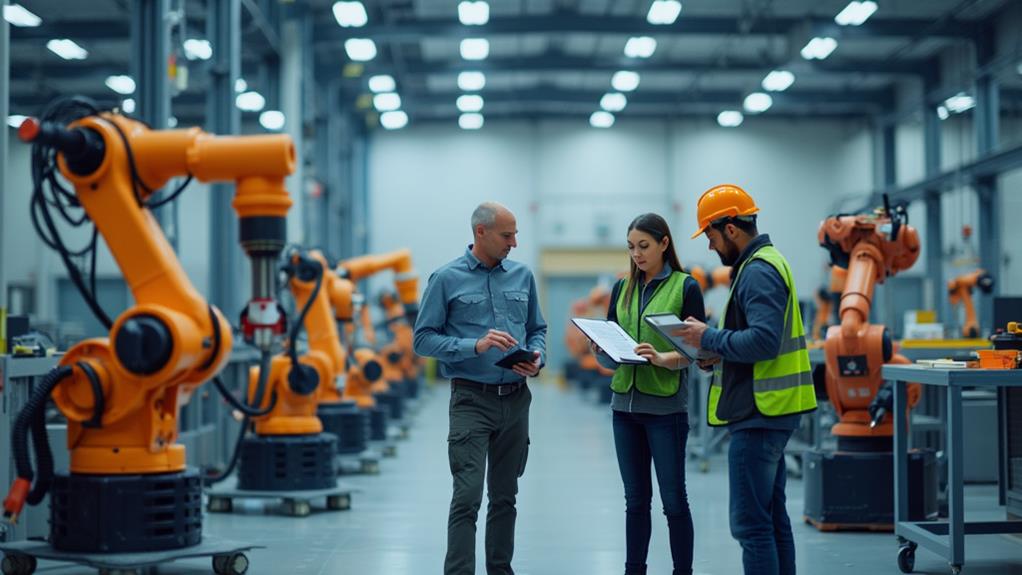
These challenges not only highlight the need for technological oversight but also invoke questions about the moral responsibilities of corporations. Should profit margins be prioritized over human welfare? The development of comprehensive regulations is critical to ensuring that robotic innovations align with societal values. As the discourse evolves, it is crucial for stakeholders, including businesses, policymakers, and the workforce, to strike a balance between embracing technological advancements and addressing the ethical implications they entail.
Failure to adequately navigate these complexities could yield lasting consequences, affecting not only economic structures but also the foundational values upon which society is built. The journey ahead involves careful consideration, innovation coupled with ethics, ensuring a future of work that respects both technology and humanity.
DISCOVER MORE: Click here to learn about the impact of machine learning in education
Redefining Labor: The Impact on Employment
The rapid deployment of robotic automation is reshaping the employment landscape across various sectors, particularly in the United States. The shift from manual labor to automated processes raises profound ethical questions regarding the future of work. As businesses prioritize efficiency and cost-effectiveness, workers are increasingly finding themselves in precarious positions.
According to the World Economic Forum, over 85 million jobs may be displaced by new automation technologies by 2025. This staggering statistic underscores the urgent need for strategies that address the looming job losses while reimagining how we view work in an automated future. Industries such as retail, logistics, and manufacturing are particularly vulnerable, where robotic systems can often outperform human capabilities in speed and accuracy.
Retrofitting Skillsets for Future Demands
With the potential for widespread job displacement, there is a growing call for retrofitting skillsets to meet the demands of an evolving job market. The question remains: how can we effectively equip workers with the necessary tools to thrive in an automated environment? Initiatives aimed at reskilling and upskilling the workforce have been proposed, yet their success largely depends on proactive engagement from corporations and educational institutions alike.
- Corporate Responsibility: Companies need to assume a proactive role in implementing training programs. By investing in employee education and offering resources for skill development, businesses can foster a more adaptable workforce.
- Government Intervention: Policymakers can facilitate transitional support through incentives and grants for companies that invest in employee education, as well as programs that assist displaced workers in finding new roles.
- Community Engagement: Training centers and institutions can partner with industries to create tailored programs aimed at bridging the skill gap, ensuring workers are better prepared for the future.
Without a concerted effort to address these disparities, the ethical implications of automation go beyond individual job loss. The systemic disruption of entire communities and economies can lead to increased inequality and social unrest, making it imperative to consider the long-term effects of adopting robotic systems.
The Ethical Quandary of Profit vs. People
Central to the debate surrounding robotic automation is the ethical quandary of prioritizing profitability over human welfare. As companies embrace automation to cut costs and improve efficiency, the needs and rights of employees can sometimes be sidelined. This challenge presents businesses with a crucial moral dilemma: can they sustainably grow while ensuring not to alienate their human capital?
Leaders in the corporate sphere must navigate this complex landscape by embedding ethical considerations into their business models. Developing frameworks that prioritize human dignity, fair labor practices, and social responsibility will become increasingly vital as automation technologies evolve. The balance between technological advancement and ethical responsibility will be a defining factor in the future workplace.
As society moves deeper into the age of automation, grappling with these ethical challenges must remain a priority. Only through conscientious reflection and action can we hope to construct a workforce that embraces both innovation and humanity.
| Category | Key Considerations |
|---|---|
| Job Displacement | As robots take over repetitive tasks, many workers face unemployment, raising concerns about their future roles. |
| Privacy Concerns | Increased surveillance from robotic systems may infringe on employee privacy, leading to ethical dilemmas in monitoring performance. |
| Skill Gap | Workers may lack necessary skills to manage advanced robotic systems, creating further divisions in the workforce. |
| Decision-Making Transparency | The algorithms driving automation can operate as black boxes, making it difficult to understand their decision-making processes. |
The discussion around the *Ethical Challenges of Robotic Automation in the Workplace* has intensified, especially as organizations embrace advanced technologies to optimize operations. The implications of job displacement not only affect employees but also pose significant socio-economic challenges. In regions heavily reliant on traditional labor, this displacement could lead to increased unemployment rates, prompting discussions on ethical retraining programs.Moreover, the issue of privacy becomes increasingly pressing as workplace robotics often involve heightened surveillance measures. These systems collect extensive data on employee behavior, which can lead to ethical dilemmas surrounding consent and personal privacy. As such, companies must navigate the fine line between ensuring productivity and respecting individual rights.Additionally, there is a growing skill gap exacerbated by the rapid pace of automation. Many workers find themselves unprepared for roles requiring technological competencies, which raises questions about equitable access to training and resources. Lastly, transparency in decision-making becomes a crucial topic; organizations utilizing robotic systems must ensure that their algorithms are accountable to prevent unintended biases that can affect employees negatively.
DISCOVER MORE: Click here to learn about the challenges and innovations in computer vision for autonomous vehicles</p
Addressing Bias and Discrimination in Automated Systems
As businesses increasingly rely on robotic automation and artificial intelligence (AI) to streamline operations, the ethical implications take on a new dimension, especially concerning bias and discrimination embedded within these technologies. The algorithms that drive automated systems often reflect the biases present in the data used to train them. This can lead to discriminatory practices, inadvertently marginalizing certain groups of workers based on gender, race, or socio-economic status.
For instance, AI-driven hiring tools have been shown to favor resumes that contain specific keywords, often disadvantaging qualified candidates who may not have access to the same linguistic advantages or educational backgrounds. A notable incident occurred when a major tech company scrapped its AI recruitment tool after discovering it favored male candidates over female applicants, highlighting the profound ethical dilemmas organizations face when implementing automated systems without rigorous oversight.
Transparency and Accountability in Algorithms
The call for transparency and accountability presents yet another ethical challenge. With the complexity of machine learning algorithms, understanding how decisions are made can be a daunting task. This obscurity leaves workers vulnerable, as they may find themselves subjected to automated decisions that lack clarity and justification.
- Algorithm Audits: Regular audits of algorithms used in hiring, evaluation, and promotion processes could help identify biases, encouraging companies to refine their systems and promote equitable practices.
- Open-Source Initiatives: Encouraging the development of open-source algorithms can foster wider scrutiny and collaboration, allowing for collective efforts in mitigating bias and ensuring fairness.
- Human Oversight: Integrating human oversight into automated decision-making processes can help ensure that ethical considerations are accounted for and that personnel are not unduly penalized for factors beyond their control.
Ultimately, organizations bear the ethical responsibility of ensuring that automation does not perpetuate existing inequalities. Fostering an inclusive workplace involves scrutinizing how algorithms interact with human employees and taking action to rectify any disparities uncovered during these investigations. By proactively addressing these issues, businesses can establish a sense of trust and equity in a technologically driven work environment.
The Environmental Impact of Robotics
While the focus often lies on employment and bias, the environmental implications of robotic automation warrant consideration as well. The production, operation, and disposal of robotic systems can result in considerable environmental strain. For example, the energy consumption of data centers powering AI systems has drawn attention, with reports suggesting they could consume more energy than entire countries. As companies increasingly rely on automation, they must consider their environmental footprint and respond accordingly.
- Sustainable Practices: Companies can invest in energy-efficient technologies and practices that minimize carbon footprints while utilizing automation.
- Lifecycle Assessments: Engaging in lifecycle assessments of robotic systems can help organizations identify areas for efficiency and sustainability improvements.
- Ethical Sourcing: Prioritizing the use of sustainably sourced materials for robotic manufacturing can mitigate environmental impacts and foster a culture of ethical responsibility.
In navigating the ethical challenges posed by robotic automation, addressing factors such as bias and environmental impact should not be an afterthought. As we continue to integrate these advanced technologies into the workplace, it becomes imperative to maintain a holistic view that encompasses both the ethical responsibilities toward employees and the wider community. Balancing these complex elements will ultimately define the future of work in an automated age.
DISCOVER MORE: Click here to learn about real-time threat detection
Conclusion: Navigating Ethical Challenges in an Automated World
The emergence of robotic automation in the workplace poses unique ethical challenges that demand rigorous examination and proactive management. From addressing bias and discrimination in automated systems to mitigating the environmental impact of these technologies, the stakes are high as organizations integrate AI into their operations. The case of biased hiring algorithms serves as a reminder that unchecked reliance on technology can perpetuate existing inequalities, underscoring the need for transparency and accountability in algorithmic processes.
Moreover, the environmental repercussions associated with the manufacturing and operation of robotic systems cannot be overlooked. As companies strive to harness automation for efficiency, they must also implement sustainable practices that minimize their carbon footprint, thereby demonstrating ethical responsibility to the planet and future generations.
In light of these considerations, it is imperative for organizations to cultivate a comprehensive ethical framework that prioritizes fairness and sustainability. By actively engaging in practices such as algorithm audits, promoting open-source initiatives, and emphasizing human oversight, businesses can pave the way for a more equitable and just automated workforce. The challenge lies not only in leveraging technology to enhance productivity but also in fostering an inclusive environment that respects the dignity of every worker.
As society stands on the precipice of a new era defined by automation, a balanced approach that integrates ethical considerations will be crucial. This not only protects employees but also builds trust with consumers and stakeholders, ultimately driving long-term success in a rapidly evolving global landscape. By addressing these critical ethical challenges head-on, organizations can not only thrive in an automated age but also set a precedent for responsible innovation.